
The straight answer
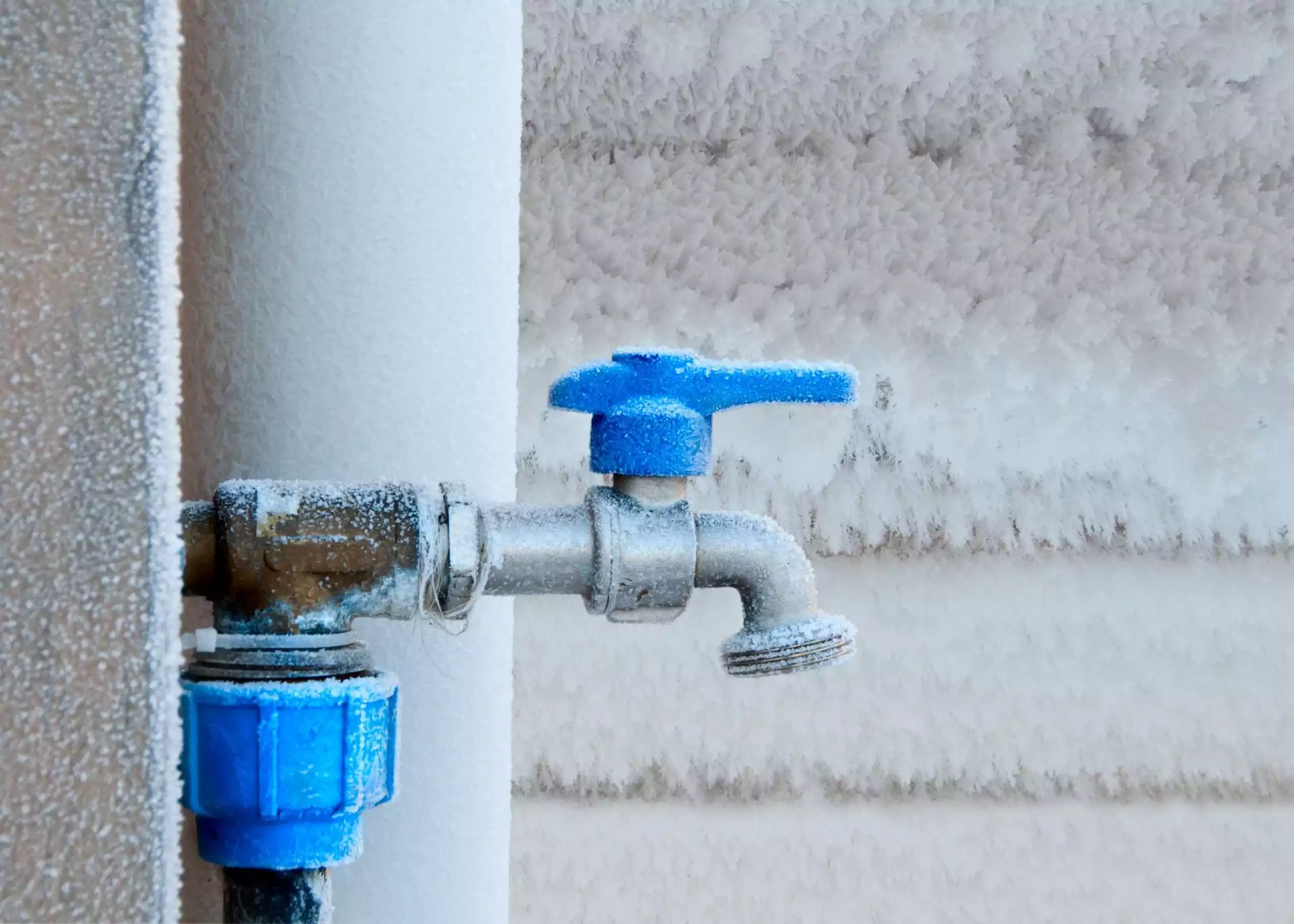
No, not all frozen pipes burst. Many pipes in DFW homes freeze and thaw multiple times across the winter without ever bursting. The factors that determine whether a freeze becomes a burst: pipe material (copper bursts readily, PEX rarely does), where the ice plug forms relative to closed fixtures (the bursting force is trapped pressure, not the ice itself), and how completely the pipe is filled with water when it freezes.
The misconception that “ice expansion bursts pipes” misses the actual mechanism. Water expands about 9% when it freezes, yes – but that expansion doesn’t burst the pipe directly. What bursts pipes is pressure that builds between an ice plug and a closed fixture (a faucet, valve, or another ice plug). The water between the obstructions is trapped, the temperature continues dropping, more water continues freezing, and pressure rises until something fails. That failure is typically a split in the pipe, a popped fitting, or a fractured joint – usually NOT at the location of the ice plug but somewhere between the plug and the closed end.
This guide walks through the actual physics of pipe freezing and bursting, why some materials handle freezing far better than others, the DFW-specific freeze patterns including the February 2021 lessons, prevention strategies that actually work, how to safely thaw a pipe you suspect is frozen, what to do if a pipe bursts, and how to assess damage and recovery.
Key takeaways
- Bursting is caused by trapped pressure, not direct ice expansion. A pipe with one end open and one end closed can build dangerous pressure between an ice plug and the closed fixture. A pipe that freezes when both ends are open often won’t burst because the expanding ice has somewhere to push the displaced water.
- Pipe material matters enormously. Copper is brittle and cracks under freeze pressure. CPVC similarly. PEX (the standard since the 2000s) can expand 1-3% without bursting and handles freezing significantly better. The pipe material in your home largely predicts your freeze risk.
- The February 13-17, 2021 Texas freeze caused widespread DFW pipe damage. Sustained sub-20-degree temperatures for 100+ hours combined with widespread power outages overwhelmed even properly-insulated systems. Lessons learned drive current freeze preparation: redundant heat sources, faucet dripping protocols, insulation upgrades, and emergency plans.
- Letting faucets drip during freezes works – not because the dripping water can’t freeze, but because the dripping releases the pressure that would otherwise build between an ice plug and the closed faucet. The pressure relief is the protective mechanism, not the warmth.
- Most DFW pipe freezes happen in attics, exterior walls, garages, and outdoor hose bibs – the vulnerable locations are predictable. Targeted insulation and protection of these spots prevents most freeze damage.
- If you have a frozen pipe but no burst yet, you have time to act. Safe thawing techniques (gradual heating, faucet open first) often resolve the situation without damage. Knowing what NOT to do (open flame, sudden heat) matters as much as knowing what to do.
- Call 214-918-6109 for emergency burst pipe repair, freeze prevention assessments, and post-freeze damage evaluation across Mesquite, Garland, Rowlett, Dallas, Plano, Richardson, Balch Springs, and Sunnyvale.
The actual physics: why pipes burst when water freezes
Understanding the mechanism explains both why bursting happens and why prevention works.
Water expansion isn’t the immediate problem
Water expands about 9% when transitioning from liquid to solid. This is meaningful but not catastrophic – pipes can typically accommodate this much expansion if the displaced water has somewhere to go. A pipe completely full of water from end to end might burst from pure expansion, but this is rare in residential systems where water sits at varying levels and has connections to fixtures, valves, and supply lines.
Pressure between obstructions IS the problem
Here’s what actually causes most freeze-related pipe failures: water starts freezing at the coldest spot in the pipe, typically near an attic vent, exterior wall, or unheated space. As the freeze grows, it forms an ice plug. Water beyond the ice plug, between it and the next closed fixture (faucet, valve, another ice plug), is now trapped. As temperature continues dropping, more water in this trapped section starts freezing too. The pressure in this enclosed space rises rapidly – sometimes from normal 40-80 PSI to several thousand PSI within hours.
Eventually something fails. The pipe material can no longer hold the pressure. A split appears, a fitting blows, or a joint fractures. The failure point is usually NOT at the ice plug itself – it’s somewhere along the pressurized section between the plug and the closed end.
Why dripping faucets prevent bursting
A faucet that’s slightly open isn’t a closed end. The pressure that would otherwise build in the trapped section has somewhere to relieve – through the dripping faucet. The dripping water itself may even freeze (a slow drip can ice over), but the pressure relief continues to work because liquid water keeps flowing past whatever ice forms. Letting faucets drip during forecast freezes isn’t about preventing the freeze; it’s about preventing the pressure buildup that bursts pipes.
Why some freezes don’t burst pipes
If the freezing pipe has open access at both ends (or open through to a relief faucet), the expanding ice and displaced water have somewhere to go. The pipe stays frozen until thawing but doesn’t crack. This is why many DFW homes have repeated freeze events without any actual pipe damage – the right conditions for catastrophic pressure didn’t develop.
Pipe material burst susceptibility
The material your pipes are made of dramatically affects your freeze risk. DFW homes have a range of pipe materials based on age and original construction.
Copper (most pre-2000 DFW homes)
Copper is the historical residential pipe standard. Strong tensile strength but BRITTLE under sudden pressure increases – exactly the kind of pressure freeze conditions create. Copper pipes that experience freeze pressure typically develop longitudinal splits along the pipe length. The cracks can range from hairline (slow leak when thawed) to half-inch wide splits (catastrophic leak immediately on thaw).
Copper home plumbing was the standard from roughly 1960 through the 1990s in DFW. Most homes built before 2000 have at least some copper supply lines. Older copper installations also have soldered joints that can fail under freeze pressure, even when the pipe itself holds.
PEX (most post-2000 DFW homes)
Cross-linked polyethylene plastic. Flexible, can expand 1-3% before reaching burst pressure, and rebounds to original shape when relieved. PEX handles freezing significantly better than copper – a PEX pipe that freezes often won’t burst even when copper in the same conditions would have.
This doesn’t make PEX immune to freeze damage. PEX fittings (especially crimp or push-fit connections) can fail under freeze pressure even when the pipe itself holds. And severe freezes that overcome PEX’s flexibility will still cause failures. But for the typical DFW freeze event, PEX is dramatically more forgiving.
CPVC
Chlorinated polyvinyl chloride plastic. Used in some DFW homes from the 1980s onward, particularly in some commercial applications and specific regional installations. CPVC is brittle similar to copper but with different failure modes – CPVC typically cracks at fittings rather than along pipe length. Has been associated with brittleness problems in freeze conditions and aging-related cracking.
Galvanized steel
Rare in modern DFW residential (last common installation era was 1940s-1960s) but still present in some older homes that haven’t been re-plumbed. Galvanized steel pipe itself is very strong and rarely bursts from freezing. The joints, however – threaded connections sealed with hemp and pipe dope – can fail under freeze pressure or with corrosion that years of freezing accelerates.
PVC (drain lines and some supply applications)
PVC is rarely used for hot/cold supply lines in DFW residential (CPVC for hot, PEX or copper preferred). PVC is more commonly drain piping. PVC in cold supply applications has variable freeze behavior depending on installation quality.
Polybutylene (rare, problematic)
Polybutylene plastic was used in some homes built 1978-1995. It has well-documented failure issues unrelated to freezing – the material degrades from contact with chlorine and chloramines in tap water, becoming brittle and prone to spontaneous failure. Polybutylene plus freeze stress is a particularly bad combination. Homes with polybutylene are typically candidates for full re-piping regardless of freeze concerns.
What your home likely has
- Pre-1960 DFW home: galvanized steel or original copper, often with selective updates
- 1960s-1990s DFW home: copper supply lines, some CPVC in specific applications
- Late 1990s-2000s DFW home: transition era – copper or PEX depending on builder
- 2000s-2020s DFW home: PEX standard for most new construction
- Any post-1978 home not re-piped: check for polybutylene (gray plastic with crimp rings)
Knowing your supply line material is foundational to understanding your freeze risk.
Where freezes happen in DFW homes
The vulnerable locations are predictable. Most freeze damage clusters in specific areas:
Attics and ceiling spaces
The most common DFW freeze location. Hot/cold supply lines run through attic spaces to reach upper floor bathrooms, kitchens with elevated routing, and exterior fixtures. Attics in DFW receive minimal heating and significant cold exposure during freezes. Pipes here are typically the first to freeze and frequently the first to fail.
Most DFW homes have water heaters in attic closets, which adds water supply lines running through cold attic space. Tankless water heater installations sometimes route gas and water lines through attics. All of this is exposed to freeze stress.
Exterior walls
Pipes running through exterior walls (between cabinet backs and exterior siding, behind bathroom walls on exterior surfaces) experience much colder conditions than interior plumbing. Insulation between the pipe and the exterior is usually inadequate during severe freezes.
Garages and uninsulated spaces
Garage walls share with the home but garage spaces are typically unheated. Pipes routed through garage walls or into garages (utility sinks, garage hose bibs, water softener installations) experience near-outside temperatures during freezes.
Outdoor hose bibs (the #1 freeze failure point)
The outdoor faucet on the side of the home is the most commonly-frozen plumbing fixture in DFW. The hose bib itself is exposed to outside air. The supply pipe behind it runs through the wall – sometimes through wall cavity, sometimes through insulation gap. A garden hose left connected during a freeze can keep water in the bib that freezes and damages the valve.
“Freeze-proof” or “frost-proof” hose bibs are an improvement (they have a long stem reaching deeper into heated interior space and shut off water back inside the wall). They reduce but don’t eliminate freeze risk, especially with a hose attached preventing proper drainage.
Crawl spaces and pier-and-beam foundations
Older DFW homes with crawl spaces have supply and drain lines exposed to crawl space air. Crawl spaces are typically warmer than outside air but much colder than inside the home. Pipes in crawl spaces freeze during sustained severe weather.
Slab penetrations
Pipes that exit through slab foundations to connect to outside fixtures (sprinkler systems, swimming pool plumbing) often have a short exposed section between the slab and where insulation begins. These short exposed sections freeze quickly.
The February 2021 freeze: what actually happened and lessons learned
The February 13-17, 2021 winter storm caused unprecedented residential pipe damage across DFW and most of Texas. Understanding what happened informs how to prepare for future events.
What made 2021 different
- Sustained extreme cold for 100+ hours – temperatures stayed below 20 degrees F for nearly 5 consecutive days, with overnight lows below 10 degrees F. DFW homes are designed for occasional cold snaps, not sustained Arctic conditions.
- Widespread power outages – the electrical grid failed for millions of Texans. Without power, heat sources failed. Without heat, attic and wall pipes that should have stayed at survivable temperatures dropped to ambient.
- Insulation overwhelmed – typical attic insulation handles 30-degree differential well. When attic temperatures dropped to 15 degrees F and stayed there, the differential exceeded insulation design limits.
- Forecasting gaps – homeowners and businesses had relatively short warning time, limiting opportunity to drain systems, install temporary heat sources, or evacuate properties.
The damage pattern
- Copper supply lines in attics and exterior walls cracked extensively
- Water heater connections at the supply and discharge points failed
- Outdoor hose bibs ruptured almost universally on exposed installations
- Polybutylene installations failed at rates approaching 100% in affected homes
- Sprinkler systems with above-ground components and inadequate drainage froze and cracked
- Swimming pool plumbing – both surface equipment and underground components
- Gas lines with condensation in low spots froze and damaged fittings
- Sewer lines in vulnerable locations experienced thermal stress
The lessons
- Forecast-driven preparation works. Homes whose owners proactively dripped faucets, opened cabinet doors, drained outdoor fixtures, and maintained interior temperature came through better than homes without these precautions.
- Power outages amplify everything. A backup heat source (generator-powered space heater, propane heater, fireplace) makes the difference between manageable freeze and catastrophe.
- Knowing where the main water shutoff is matters. When a pipe burst, the homeowners who could shut off main water quickly limited damage dramatically. Many DFW homeowners didn’t know where their main shutoff was – costly delays resulted.
- Insurance coverage varies. Standard homeowners insurance generally covers sudden burst pipe damage. But coverage limits, deductibles, and specific situations vary. Many Texans discovered after 2021 that their coverage was less comprehensive than assumed.
- Repair capacity gets overwhelmed. With tens of thousands of simultaneous freeze damage calls, plumbing services were overwhelmed for weeks. Homes had to wait. Homeowners able to shut off water and tolerate the inconvenience fared better than those needing immediate service.
How to prevent pipe freezing
Before winter arrives
- Identify your main water shutoff location – typically near the front of the home or at the meter outside; verify you can operate it
- Insulate exposed pipes in attics, crawl spaces, and unheated areas – pipe insulation costs $5-$15 per pipe at hardware stores
- Install insulated covers on outdoor hose bibs – $5-$15 each; trap heat at the faucet
- Disconnect garden hoses from outdoor faucets – water remaining in the hose freezes and damages the faucet valve
- Drain sprinkler systems if your area is at sustained-freeze risk
- Inspect and replace any failed insulation in attic and wall spaces near plumbing
- Consider freeze sensors and automatic water shutoff systems – $400-$2,500 installed depending on coverage
When a freeze is forecast
- Open cabinet doors under sinks (kitchen, bathroom) to let warm interior air circulate around supply pipes
- Let faucets drip slowly – both hot and cold sides, on the side of the home most exposed to the freeze
- Increase the heat in the home – 65 degrees minimum, higher if extended outage is possible
- Disconnect garden hoses, drain hose bibs
- Identify where you’d shut off water if a pipe burst – know before you need to know
- Consider a portable heater for the attic if you have one to spare and an extension cord run
Multi-day or severe freezes
- Maintain dripping protocol throughout the duration, not just the coldest night
- Monitor attic and wall temperatures if you have access (an inexpensive thermometer in the attic provides important data)
- Consider draining the system entirely if you’re evacuating the home or losing heat – turn off main water, open all faucets, blow lines out with air compressor if available
- Have a contingency plan – know what you’ll do if power goes out and the freeze persists
If you have a frozen pipe (not yet burst)
Diagnostic signs
- Faucet that should have water but produces only a trickle or nothing
- Other faucets at the same temperature/location working normally (indicates localized freeze)
- Visible frost or ice on accessible piping
- Strange noises from pipes (groaning, creaking) suggesting pressure buildup
Immediate action: open the faucet
The first step is to open the faucet that’s affected. This releases pressure that would otherwise build between the ice plug and the closed faucet. Open both hot and cold sides if affected. Even if water doesn’t flow immediately, having the faucet open prevents the pressure buildup that bursts pipes.
Locate the freeze
Trace the pipe from the faucet backward toward where you suspect the freeze is. If the pipe is accessible (under sinks, in cabinets, in attic), look for visible ice, frost, or cold-to-touch sections. The frozen section is typically where the pipe transitions through an unheated space.
Apply gentle heat
Use a hair dryer, space heater, heating pad, or hot towels to gradually warm the frozen section. Start at the end closest to the faucet (downstream of the ice) and work back toward the freeze. This way, as ice melts, water has somewhere to flow.
NEVER use open flame – propane torches, candle flame, lighters. The fire risk is real (insulation, wood framing, paper-faced insulation – all flammable) and sudden heat can crack the pipe itself.
NEVER use boiling water on the pipe – sudden temperature differential can shock the pipe.
Monitor water flow
As you heat the pipe, water should start flowing from the open faucet. If flow begins, you’ve broken through the ice plug – keep heating until full flow returns. If flow doesn’t begin within 15-20 minutes of focused heat application, the freeze may be more extensive or in a less accessible location – call a plumber.
Watch for burst signs
If water starts flowing from the faucet but you also hear or see water elsewhere (drips, running water, wall discoloration), the pipe burst before you could thaw it. Shut off main water immediately.
If a pipe has already burst
Step 1: Shut off main water IMMEDIATELY
The main water shutoff is typically at the front of the home, near the meter, or in a utility area. Turn the valve clockwise until fully closed. Every minute of delay adds gallons of water damage.
Step 2: Open all faucets in the home
This drains remaining pressure and water in the lines. You’ll get whatever water was in the system but no more from the supply. Open both hot and cold sides at every fixture.
Step 3: Document the damage
Before cleanup begins, photograph everything for insurance purposes. The burst location, the damaged property, the visible water, the affected areas. Insurance claims benefit from extensive documentation.
Step 4: Begin water removal
Use towels, mops, wet/dry vacuums to remove standing water. Speed matters – mold can begin growing within 24-48 hours of water exposure.
Step 5: Contact a plumber
Call 214-918-6109 (or your preferred plumber). Describe the situation: how long the water was flowing, where the burst is, what you’ve already done. During widespread freeze events, plumbing response times extend significantly – the homeowner who can describe the situation accurately gets prioritized appropriately.
Step 6: Contact your insurance carrier
Most homeowner policies cover sudden burst pipe damage. Notify your insurance carrier as soon as practical. They may want to dispatch a damage assessor or recommend specific restoration companies.
Step 7: Begin damage mitigation
Move salvageable items away from wet areas. Run fans and dehumidifiers if available. Open windows for ventilation if temperatures permit. Mold prevention is critical – the first 48 hours after water damage are the most important for mitigation.
2026 DFW pricing for freeze damage repair
Single-pipe burst repair
- Accessible burst (visible, easily reached): $300-$800
- Wall-cavity burst (requires drywall opening): $500-$1,500
- Attic burst (long run, multiple access challenges): $600-$2,000
- Slab penetration burst: $1,000-$3,500+
Multiple burst situations
- Whole-home freeze event (3-7 burst locations): $3,000-$15,000+
- Multiple wall and attic bursts: $5,000-$25,000+
- Full re-piping due to polybutylene or aged copper: $8,000-$30,000+
Specific component freeze damage
- Outdoor hose bib replacement (with freeze-proof upgrade): $250-$500
- Water heater connection failure: $300-$800
- Sprinkler system damage: $500-$3,000+
- Pool plumbing damage: $1,500-$8,000+
Prevention and preparedness
- Pipe insulation for vulnerable runs: $200-$800 installed
- Freeze-proof hose bib installation: $250-$500 each
- Whole-home freeze sensor + auto-shutoff valve: $800-$2,500
- Sprinkler system winterization (annual): $100-$300
Insurance considerations
Standard homeowner’s insurance generally covers sudden burst pipe damage. The water damage to flooring, drywall, contents, and ceilings is typically covered. The cost to repair the burst pipe itself is sometimes covered, sometimes excluded.
What’s usually covered
- Water damage to floors, walls, ceilings, cabinets, contents
- Sudden pipe failures from freeze events
- Cost of temporary lodging if home is uninhabitable
- Drying, restoration, and mold mitigation
What may not be covered
- Damage from gradual leaks (the carrier may argue the leak was “ongoing” rather than “sudden”)
- Damage from “neglect” – if you knew about a freeze risk and didn’t take preventive steps
- Damage exceeding policy limits
- Some policies exclude or limit “freeze damage” specifically – read your policy
- Mold damage discovered later may have separate coverage limits
Documenting for insurance
Before any cleanup, photograph and video everything. Take notes about what happened, what time you noticed it, what you did. Keep all receipts for emergency expenses, cleaning supplies, and professional services. The more documentation, the easier the claim process.
A 30-year DFW perspective on freeze damage
The 2021 freeze was a wake-up call for many DFW homeowners who had assumed freeze prevention was unnecessary in our climate. The truth is that DFW averages 2-5 hard freeze events per year, and an occasional extreme event like February 2021 is statistically expected once every 20-50 years. Preparing for the typical winter is reasonable; preparing for the worst case is prudent for high-value homes.
The homes that handle freezes well have a few common characteristics: PEX (not copper) supply lines; insulated attic and wall spaces; freeze-proof hose bibs; and an attentive owner who follows the dripping protocol during forecast cold. The homes that get hit hardest have copper supply, attic water heaters, inadequate insulation, and absent owners during cold events.
The cost of freeze prevention is modest compared to the cost of damage. A few hundred dollars in pipe insulation, hose bib covers, and one professional freeze prep visit annually is cheaper than a single burst pipe event. The math is clear; the discipline to act on it is what separates the prepared from the unprepared.
What homeowners get wrong most often is assuming a previous freeze that didn’t burst means future freezes won’t either. Each freeze event is independent. A pipe that froze in 2024 without bursting may have developed micro-cracks that fail in 2025. A home that came through 2021 with damage may still have hidden weaknesses that surface during the next storm. Treating each forecast freeze as a fresh risk – and acting accordingly – is the right approach.
When should you call James Armstrong Plumbing?
Call 214-918-6109 if any of the following apply:
- You have an active burst pipe situation
- You have a frozen pipe that you can’t safely thaw yourself
- You experienced freeze damage in 2021 (or later events) that wasn’t comprehensively addressed
- You want a pre-winter freeze prevention assessment
- You’re considering pipe insulation, freeze sensors, or auto-shutoff valves
- You have copper supply lines and want to evaluate freeze risk and possible PEX upgrade
- You suspect you have polybutylene plumbing (gray plastic with crimp rings)
- You bought a home with unknown plumbing material and want professional assessment
- You want to upgrade outdoor hose bibs to freeze-proof models
Master Plumber James Armstrong (License M-39428, BBB A+ since 2018) and the JAP team handle freeze prevention, emergency burst repair, and full plumbing repair across DFW. For related guides, see whole-house repiping for material upgrade context and water heater problems and solutions for related freeze-vulnerable equipment. Service areas: Mesquite, Garland, Rowlett, Dallas, Plano, Richardson, Balch Springs, and Sunnyvale.
Frequently asked questions
Do all frozen pipes burst?
No. Many pipes freeze and thaw without bursting. The factors that determine bursting: pipe material (copper bursts readily, PEX rarely does), where the ice plug forms relative to closed fixtures (the bursting force is trapped pressure, not the ice itself), and how completely the pipe is filled with water. Letting faucets drip during freezes prevents most bursting because it releases the pressure that would otherwise build between an ice plug and the closed faucet.
Why do pipes burst when they freeze?
Not from the ice expansion directly. The actual mechanism: water starts freezing at the coldest spot in the pipe, forming an ice plug. Water beyond the ice plug, between it and the next closed fixture, is now trapped. As temperature continues dropping, more water in this trapped section freezes too. Pressure rises rapidly – sometimes to several thousand PSI. Eventually the pipe material can’t hold the pressure and something fails. The failure point is usually NOT at the ice plug itself – it’s somewhere along the pressurized section.
What temperature do pipes start freezing at?
Water freezes at 32 degrees F at standard atmospheric pressure, but pipes typically need lower temperatures to freeze because the moving water and heat from the home keep them above ambient. Practical freeze thresholds for DFW: exposed pipes (attics, exterior walls, garages) can start freezing when outside temperatures reach the low 20s F if conditions persist for hours. Severe freeze events (single digits F for sustained periods) overwhelm even insulated systems.
Does letting faucets drip really prevent pipe bursting?
Yes – but not for the reason most people think. The dripping water itself often does freeze (you can see ice form at a slow-dripping faucet during severe freezes). What the drip does is prevent pressure buildup. When an ice plug forms in the pipe, water between the plug and the closed faucet would normally be trapped, and pressure would build until something fails. A dripping faucet isn’t closed – the pressure can relieve through the drip. The drip is pressure relief, not heat addition.
How long does it take for a frozen pipe to burst?
Varies dramatically by conditions. In severe conditions (single-digit temperatures, sustained cold), pipe pressure can reach burst levels within hours of the initial freeze. In moderate conditions, days. Some pipes freeze repeatedly across winter without ever bursting. The variables: how completely the pipe was full of water, how much pressure relief was available, what material the pipe is, how cold the environment got. A pipe still frozen and intact after 12 hours of cold may make it through; one that’s been frozen and dropping pressure-resistance over 36 hours is at higher risk.
How can I tell if my pipes are frozen?
Most common signs: faucets that should produce water deliver only a trickle or nothing; other faucets in the home work normally (indicating localized freeze rather than supply issue); visible frost or ice on accessible piping; strange noises from pipes (groaning, creaking) suggesting pressure buildup; a pipe that’s noticeably cold-to-touch at one location but warmer further along. Trace the pipe from the affected fixture backward to identify where the freeze is.
What should I do if I have a frozen pipe?
First, open the affected faucet to relieve pressure (the protective mechanism that often prevents bursting). Then apply gradual heat – hair dryer, space heater, heating pad, hot towels – to the frozen section. Start at the faucet end and work back toward the freeze. NEVER use open flame (fire risk) or boiling water (thermal shock). Watch for water flow as the ice melts. If flow doesn’t start within 15-20 minutes of focused heat, call a plumber.
What should I do if a pipe bursts?
Shut off main water immediately. Open all faucets in the home to drain remaining pressure. Photograph and document everything before cleanup. Begin water removal with towels, mops, wet/dry vacuums. Contact a plumber. Contact your insurance carrier. Begin damage mitigation – mold can grow within 24-48 hours. Every minute of delay in shutting off main water adds gallons of damage.
Are PEX pipes really better than copper for freeze resistance?
Yes, significantly. PEX is flexible plastic that can expand 1-3% before reaching burst pressure and rebound to original shape. Copper is brittle and cracks under freeze pressure – typically developing longitudinal splits. A PEX pipe and copper pipe in identical freeze conditions often have different outcomes: the PEX freezes and thaws without damage; the copper cracks. This doesn’t make PEX immune (fittings can still fail, severe freezes still overwhelm any material) but PEX is dramatically more forgiving for typical DFW freeze events. Most DFW homes built since 2000 have PEX; many older homes are candidates for re-piping when budget allows.
Does homeowners insurance cover burst pipe damage?
Generally yes, for sudden burst pipe damage from freeze events. The water damage to flooring, walls, ceilings, cabinets, and contents is typically covered. The cost to repair the burst pipe itself is sometimes covered, sometimes excluded. Coverage limits, deductibles, and specific exclusions vary by policy. Damage from gradual leaks may be argued as “ongoing” rather than “sudden.” Damage from “neglect” – if the homeowner knew about freeze risk and didn’t take preventive steps – may be denied. Read your policy and call your carrier immediately when a burst occurs.
This guide reflects typical 2026 residential pipe freeze and burst considerations in DFW. Specific situations require on-site evaluation. Pricing varies with extent of damage, accessibility, and material costs. Insurance coverage varies by policy.