
TL;DR
- A warm spot on the floor, a spike in your water bill, or the sound of running water with every fixture off are the three most common slab leak signs in Mesquite homes.
- Rule out a running toilet first with a dye test. It is the most common false alarm behind a high water bill.
- Turn off your main water shutoff valve if you can access it, then call a licensed plumber. Do not try to dig into the slab yourself.
- Mesquite sits on expansive clay soil that shifts with moisture changes, which is the leading cause of slab leaks in the area.
- Plumbers confirm a slab leak with electronic leak detection or a camera inspection before any concrete is cut, typically priced between $150 and $400.
- James Armstrong Plumbing is a Master Plumber-owned company, Texas License M-39428, founded in 1995 and based in Mesquite, TX.
If You Think You Have a Slab Leak in Mesquite, Here Is What to Do
A slab leak is a water leak in the pipes running underneath your home’s concrete foundation. If you notice a warm spot on the floor, hear running water when every fixture is off, or see your water bill jump without a clear reason, shut off your main water valve if you can reach it and call a licensed plumber right away. Waiting lets the leak erode soil under the slab and raises the cost of repair.
What Is a Slab Leak?
A slab leak happens when a water line running under a home’s concrete foundation develops a crack, pinhole, or full break. Most homes built on a concrete slab route hot and cold water lines directly beneath the concrete. When one of those lines fails, water has nowhere to go but up through the slab, sideways through the soil, or both.
Slab leaks differ from sewer line leaks. A water supply line slab leak is pressurized, which is why it tends to show up fast through a high water bill. A sewer or drain line leak under the slab is not pressurized and often shows up more slowly through smell or soil movement instead.
What Are the Warning Signs of a Slab Leak in a Mesquite Home?
The clearest sign of a slab leak is a warm or damp patch on an otherwise dry floor, especially over a hot water line. The other reliable signs are a water bill that jumps without a change in use, running water you can hear with every fixture off, and a meter that keeps moving after you shut everything down.
Homeowners also report:
- A water bill that rises 30 percent or more with no change in household water use.
- The sound of running water inside a wall or floor when every faucet and appliance is off.
- Low water pressure at one or more fixtures while others run normally.
- Cracks in flooring, baseboards, or nearby drywall that were not there before.
- A musty smell or unexplained mold near an exterior wall or low point in the home.
- The water meter still spinning after you shut off every fixture in the house.
Any one of these on its own is worth a call. Two or more together mean the leak has likely been running for a while.
What Should You Do the Moment You Suspect a Slab Leak?
Locate your main water shutoff valve and turn it off if you can reach it safely. This stops the leak from getting worse while you wait for a plumber. Do not try to cut into the slab yourself to find the leak. Concrete cutting without proper leak detection equipment usually means guessing at the location, which turns a repairable leak into a much larger, more expensive job.
Next, call a licensed plumber and describe what you noticed: where the warm spot is, how much your bill went up, and whether you hear running water. That information helps the plumber bring the right detection equipment on the first visit instead of a second trip.
James Armstrong Plumbing is open Monday through Friday, 8 a.m. to 5 p.m. Same-day service is available for calls placed before noon. A $132 (5–10 PM) or $184 (10 PM–8 AM) fee applies to after-hours calls. Reach the office at 214-918-6109 or through the contact page.
Could It Be a Running Toilet Instead?
Very possibly, and it is worth ruling out before anything else. A silently running toilet is the most common explanation for an unexplained jump in a water bill, and it produces the same headline symptom as a slab leak without any of the expense.
Test each toilet with dye:
- Put a few drops of food coloring or a dye tablet in the tank, not the bowl.
- Do not flush, and wait fifteen to twenty minutes.
- Check the bowl. If color has appeared in the bowl, the flapper is passing water and that toilet is your leak.
Clear water in the bowl means that toilet is sound. Run the test on every toilet in the house before you conclude anything about the slab.
A failed flapper costs a few dollars. Confirming it first is the cheapest diagnostic step available.
How Do You Confirm a Slab Leak With Your Water Meter?
Shut off every fixture in the house, then watch the meter. If the leak indicator moves with nothing running, water is escaping somewhere between the meter and your fixtures. That is the closest thing to a definitive home test.
Do it in this order:
- Turn off every tap, appliance and ice maker, and do not flush anything.
- Find the meter at the street and note the reading, including the small leak indicator dial or triangle.
- Wait fifteen minutes without using any water.
- Read it again. Any movement means water is leaving the system.
- Now close the main shutoff on the house side and repeat. If the meter stops, the leak is inside the house or under the slab. If it keeps moving, the leak is in the service line between the meter and the house.
That last step is the one most guides omit, and it is the one that separates a slab leak from a broken service line. The two need different work.
Why Do Some Slab Leaks Have No Warm Spot?
Because a warm spot only appears when the leak is on a hot water line. A warm patch on the floor is the symptom everyone knows, and roughly half of slab leaks produce no temperature change at all.
Hot line leaks are the ones people notice. Heated water warms the concrete above it, and a bare foot or a pet finding one patch of floor unusually warm is the classic discovery.
Cold line leaks are quieter. There is no temperature signal, so they present instead as a high water bill, a drop in pressure, the sound of running water, or damp at the floor edge. They are frequently found later and after more damage.
If your symptoms are financial rather than physical, do not rule out a slab leak because the floor feels normal.
Why Are Slab Leaks So Common in Mesquite and North Texas?
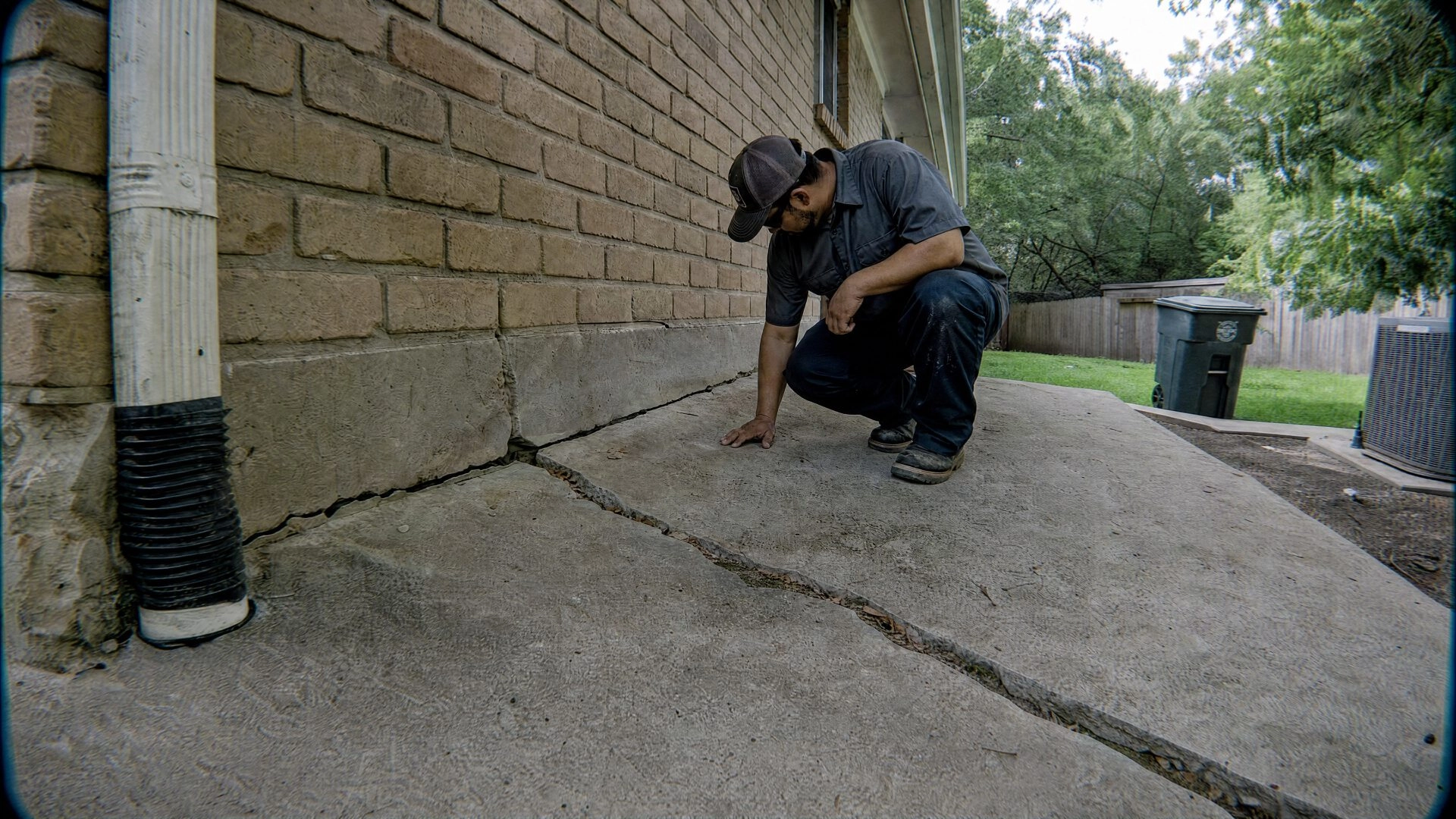
Mesquite sits on expansive clay soil, the same soil type found across most of North Texas. Expansive clay swells when it absorbs water and shrinks when it dries out. That constant movement puts pressure on the pipes running underneath a home’s slab, and over years it can crack copper or shift a joint enough to start a leak.
North Texas also cycles between heavy spring rain and dry summer heat every year, which means the soil under a Mesquite home is expanding and contracting more than in most parts of the country. Our guide to how DFW expansive clay soil causes slab leaks covers the soil mechanics in more depth.
Homes over 20 years old with original copper supply lines are at the highest risk, since copper corrodes and fatigues faster under this kind of repeated ground movement than PEX. Our comparison of PEX versus copper in a whole house repipe explains the difference.
Did the Foundation Break the Pipe, or Did the Pipe Move the Foundation?
Both happen here, and telling them apart matters because it decides who you call first. North Texas sits on expansive clay that swells when wet and shrinks when dry, and that movement works against everything cast into or running beneath the slab.
The two directions:
- Soil movement breaks the pipe. Clay expands and contracts with the seasons, stressing rigid pipe under the slab until a joint separates or a line cracks.
- The leak moves the soil. Water escaping under a slab saturates clay in one area, that area swells, and the differential movement shows up as cracks in walls and doors that stop closing.
The practical sequence is to establish whether water is escaping before commissioning any foundation work. A foundation contractor levelling a slab over an active leak is repairing the symptom while the cause continues.
How Does a Plumber Find a Slab Leak?
A plumber confirms a slab leak before doing any concrete work. Electronic leak detection traces the sound of water escaping a pressurized line and pinpoints it without cutting the slab, and a camera inspection is used where the leak is suspected on the drain side rather than the supply side.
Electronic leak detection. A plumber uses acoustic listening equipment to trace the sound of water escaping a pressurized line, which pinpoints the leak’s location without cutting into the slab.
Camera inspection. For leaks suspected on the drain or sewer side rather than the pressurized supply side, a plumber runs a camera through the line to see cracks, offsets, or root intrusion directly. Camera inspections in Mesquite typically run $150 to $400 depending on line length and access.
If the supply line pressure test suggests a leak but the exact location is still unclear, a plumber may also run a hydrostatic pressure test, priced between $300 and $500, to confirm which section of the system is losing pressure before any repair work starts.
How Is a Slab Leak Repaired?
Repair takes one of three forms. A spot repair opens the slab or an accessible wall at the leak and replaces that section only, a reroute abandons the failed line and runs a new one above the slab, and a full repipe replaces the water lines throughout the home.
Spot repair. The plumber accesses the exact section of pipe, either through the slab at that single point or through an accessible wall, and repairs or replaces that section only. This is the least invasive option when the leak is isolated to one small area.
Reroute. Instead of repairing the damaged section under the slab, the plumber reroutes the water line above the slab, typically through the attic or along an exterior wall. This avoids cutting concrete entirely and is often the more cost-effective option for an isolated leak.
Repipe. If a home has multiple slab leaks over time, usually a sign that the original copper lines are failing broadly, a full repipe replaces the water lines throughout the home, generally with PEX. This costs more upfront but ends the pattern of repeated slab leak calls.
Our slab leak detection and repair team will recommend the method based on the leak’s location, your home’s age, and how many prior leaks you have had.
How Much Does Slab Leak Repair Cost in Mesquite, TX?
Slab leak repair cost depends on which of the three repair methods above fits your situation, plus how deep and how far under the slab the leak sits. Diagnostic costs are more predictable: camera inspection runs $150 to $400, and a hydrostatic pressure test runs $300 to $500. Repair cost itself varies enough between a simple spot repair and a full repipe that a licensed plumber needs to see the diagnostic results before quoting a firm number. James Armstrong Plumbing provides a written quote after diagnosis, before any repair work begins.
Will Insurance Cover a Slab Leak?
It depends on the policy, and the usual split is that carriers cover the damage but not the pipe. Many Texas homeowner policies pay to open the slab and to repair the resulting damage, while excluding the cost of repairing the failed pipe itself.
Ask your carrier three questions and get the answers in writing:
- Does the policy cover access, meaning breaking and restoring the concrete?
- Does it cover the resulting water damage to flooring and contents?
- Does it cover the pipe repair itself, or only the damage?
Document everything from the start. Photograph the symptoms, keep the detection report, and keep every invoice. That report is usually what a carrier asks for first.
Do not open the slab before you have spoken to your insurer, unless water is actively causing damage.
When Should You Call a Licensed Plumber for a Slab Leak?
Call as soon as you notice any of the warning signs above, not after the water bill arrives for a second month in a row. A slab leak does not get smaller on its own. The longer pressurized water runs under a foundation, the more soil it erodes, which raises both the plumbing repair cost and the risk of foundation damage that falls outside a plumber’s scope entirely.
James Armstrong Plumbing has served Mesquite and the surrounding DFW area since 1995. James Armstrong holds Texas Master Plumber License M-39428. Call 214-918-6109 or visit our slab leak detection and repair page to schedule a diagnosis.