
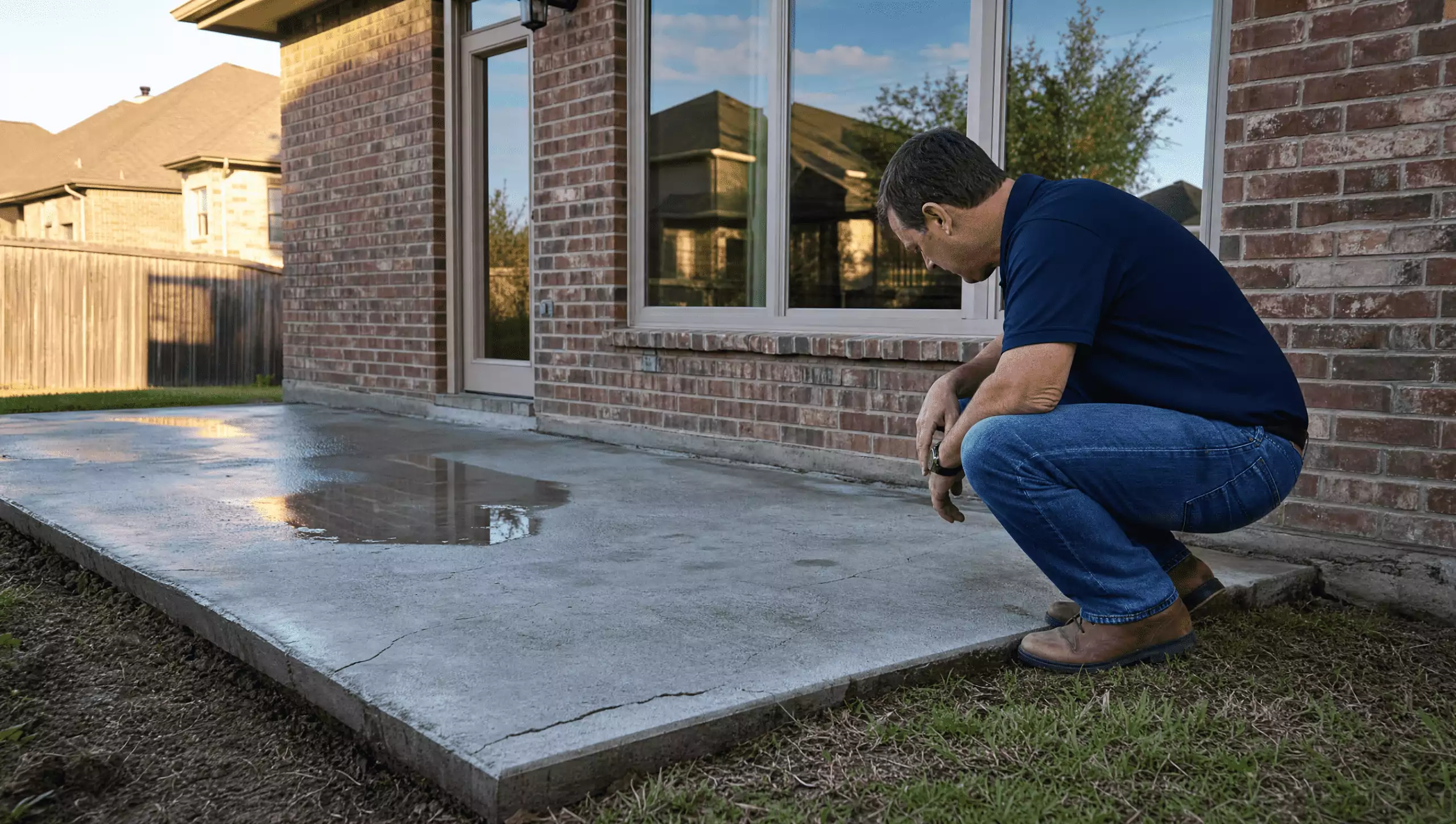
DFW sits on expansive clay soil that swells when wet and shrinks when dry, moving the ground under your foundation by an inch or more every year. That movement breaks under-slab pipes four ways: it separates joints, grinds pipe against concrete, shears lines where they enter the slab, and leaves pipe spans unsupported. You cannot stop the clay, but you can slow the cycle. Consistent foundation moisture, controlled water pressure, and early leak detection are the three protections that actually work.
Key Takeaways
- The clay under most of DFW contains minerals that absorb water and swell, then release it and shrink. The ground your slab sits on physically changes volume with the weather.
- Late summer is peak stress season. July through September drought shrinks the soil, pulls support away from your foundation and pipes, and sets up the sharpest movement when fall rains swell it back.
- A slab leak feeds itself. Escaping water saturates the clay under one spot, causing uneven swelling, more movement, and more pipe stress. Small leaks grow into foundation problems.
- Foundation watering is not a landscaping habit. It is pipe protection. Keeping soil moisture consistent through a DFW summer is the single most effective thing a homeowner can do.
- Standard homeowners insurance usually covers sudden water damage from a slab leak but not the pipe repair itself, and it excludes gradual leaks and earth movement. Knowing this before a leak changes how fast you act on one.
What Is Expansive Clay, and Why Is DFW Built on It?
Most of Mesquite, Garland, Dallas, and the eastern metroplex sits on the Texas Blackland Prairie, a band of dark clay soil that runs through the middle of the state. The clay contains minerals, chiefly montmorillonite, that absorb water directly into their structure. When the clay takes on moisture it swells. When drought pulls the moisture out, it shrinks and cracks. Engineers call it shrink-swell soil, and North Texas has some of the most active shrink-swell soil in the country.
The volume change is not subtle. Active clay can move the ground surface an inch or more between a wet spring and a dry September, and the movement is uneven: the soil at the exposed edges of your foundation dries faster than the protected soil under the center of the slab. Uneven movement is what does the damage. The slab and everything attached to it gets lifted on one side, dropped on another, and flexed in between.
The DFW Seasonal Cycle That Breaks Pipes
Spring: Heavy rains saturate the clay. The soil swells and pushes upward against the slab edges. Pipes penetrating the slab get squeezed and lifted.
July through September: Drought and 100-degree weeks bake moisture out of the top several feet of soil. The clay shrinks, cracks open, and pulls away from the foundation. Pipes that were bedded in firm soil in May are hanging in loosened soil by August. This is why late summer and early fall are slab leak season in DFW.
Fall: The first big rains hit dried, cracked clay and it swells back fast. The rapid reversal is the sharpest movement of the year, and it lands on pipes already stressed by the summer shrink.
Winter: The cycle slows but does not stop, and hard freezes add their own stress. The February 2021 freeze left micro-damage in DFW plumbing that camera inspections and leak tests are still finding in 2026.
How Does Soil Movement Actually Break a Pipe?
Joint separation. Rigid pipe moves as sections. When the soil supporting two joined sections moves unevenly, the joint takes the strain and eventually pulls apart or cracks. Drain lines and older copper with soldered joints fail here first.
Abrasion. A pipe that shifts a fraction of an inch, thousands of times, against concrete or gravel wears through its own wall. Copper is durable against water pressure and soft against grinding. Abrasion failures look like pinholes worn from the outside in.
Shear at slab penetrations. Where a pipe passes through or under the slab edge, the slab moves one way and the soil-held pipe resists. The penetration point acts like a scissors blade. These are the most abrupt failures.
Unsupported spans. When shrinking soil drops away beneath a pipe run, the pipe bridges the gap and sags under its own weight and water load. Water lines develop stress cracks. Drain lines develop bellies, which is the same mechanism our post on under-slab camera inspection findings covers on the sewer side.
Then the feedback loop starts. A leaking line saturates the clay around it, that clay swells while the soil ten feet away stays dry, and the uneven movement accelerates. The leak causes movement, and movement worsens the leak. This loop is why a slab leak left alone becomes a foundation repair, and why the water bill creep that signals a hidden leak deserves same-week attention, not someday attention.
Why Do Hot Water Lines Fail First?
Most DFW slab leaks happen on the hot side. The hot line adds thermal cycling to the soil stress: it expands with every water heater draw and contracts as it cools, hundreds of times a week, which multiplies the abrasion at every contact point. Warm water also accelerates corrosion chemistry inside copper. A warm spot on the floor is the classic giveaway, and our guide to the warning signs of a slab leak covers the full symptom list so you can catch one early.
How Do You Protect a Home You Cannot Move?
Water the foundation through summer. Run soaker hoses about 12 to 18 inches out from the foundation edge during extended dry stretches, enough to keep the soil from cracking and pulling away, not enough to pond. The goal is steady moisture, not wet soil. This is the highest-value habit on this list because it attacks the shrink half of the cycle directly.
Move roof water away. Clean gutters and downspout extensions that discharge 3 to 5 feet from the foundation prevent the opposite problem: concentrated swelling at the corners where downspouts dump.
Check the grading. Soil should slope away from the house. Low spots against the foundation create localized swell zones every time it rains.
Test your water pressure. Pressure above 80 psi turns small clay-inflicted defects into leaks faster. A $15 gauge on a hose bib tells you where you stand, and a pressure reducing valve fixes it if you are high.
Plant trees with their mature size in mind. Large trees pull enormous moisture from clay, deepening the summer shrink on one side of the house. The 30-foot guideline from our tree roots and sewer lines guide protects your slab plumbing too.
Watch the water bill and act on changes. The bill is your leak detector of record. A jump without a usage explanation is the cheapest early warning you will ever get.
Does Homeowners Insurance Cover Slab Leaks in Texas?
Usually partly, and the distinctions matter. Standard Texas homeowners policies generally cover sudden and accidental water damage, meaning the flooring, drywall, and belongings damaged when a line fails. The pipe repair itself is typically not covered, and two exclusions do heavy lifting against homeowners: gradual leaks, the kind that seeped for months, are commonly denied as maintenance issues, and earth movement, including soil swelling and settling, is a standard exclusion even when that movement caused the pipe to fail.
Three practical takeaways. First, speed protects your claim: the longer a leak runs, the more it looks gradual. Second, document everything with dates, photos, and your plumber’s written findings. Third, read your policy for water damage endorsements before you need them, and verify current coverage details with your insurer or the Texas Department of Insurance, because policies vary and this article is not insurance advice.
How Much Does DFW Soil Actually Move?
Active Blackland Prairie clay can move the ground surface an inch or more across a wet-to-dry season, and several inches over multi-year drought cycles. Movement varies street to street with soil composition, drainage, and tree cover, which is why one house on a block develops slab leaks while its neighbor never does.
Can You Prevent Slab Leaks Entirely?
No. The clay is permanent and the cycle is annual. What you control is how hard the cycle hits: consistent foundation moisture, managed drainage, controlled pressure, and early detection convert slab leaks from a recurring disaster into a rare and manageable repair.
Does Foundation Watering Really Work?
Yes, and it is standard practice across North Texas for good reason. Steady soil moisture through summer keeps the clay from shrinking away from your foundation and pipe bedding, which removes the sharpest movement from the annual cycle. It costs a few dollars a month in water and beats every repair alternative by thousands.
Built on Clay for 30 Years, Plumbed Accordingly
James Armstrong Plumbing has repaired slab leaks across Mesquite and the eastern DFW metroplex for more than 30 years, on the same clay this article describes. If you have a warm floor spot, an unexplained bill jump, or the sound of water running behind silence, our slab leak detection and repair service uses isolation testing to confirm the leak and locate it precisely before any concrete gets touched. Call 214-918-6109 and get an answer this week, while it is still a plumbing problem and not a foundation one.