
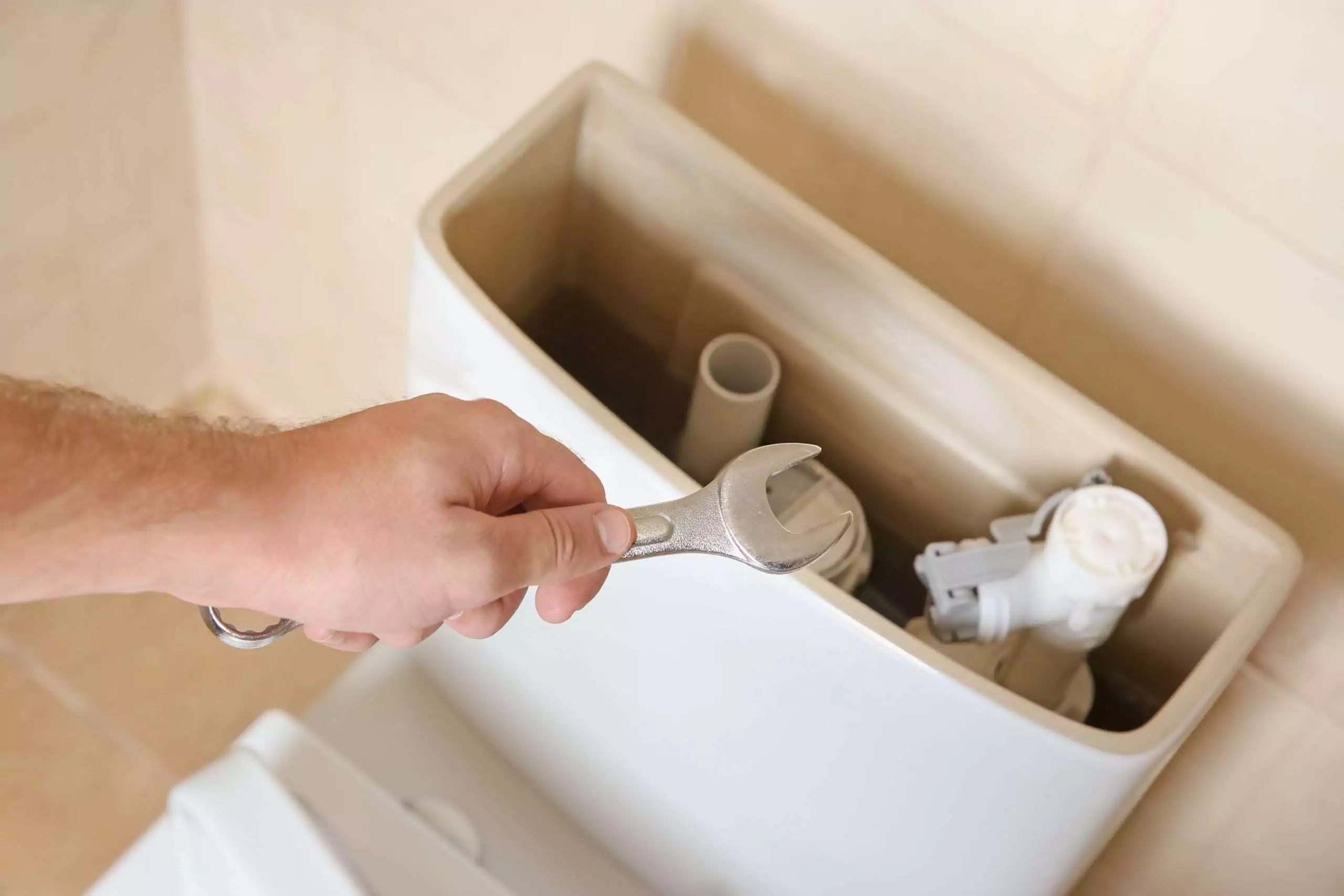
The straight answer
Technically yes – most toilet fill valves can be repaired by replacing internal components (washers, seals, the refill tube, the float assembly). Practically, however, full fill valve replacement is almost always the better choice. A new Fluidmaster 400A fill valve costs $8-$15, takes 15-30 minutes to install, and gives you another 7-10 years of reliable operation. A repair kit costs $5-$10 and only addresses one specific failure mode – if a different component fails six months later, you’re doing it again.
The exceptions where repair is the right call: vintage toilets with original brass hardware that should be preserved, specialty toilets where the original fill valve is a specific manufacturer part with no generic replacement, and the rare case where a single washer or seal is the only thing that has failed and you have the exact replacement part already on hand. For everyone else in 2026 DFW, replacement is the answer.
This guide walks through how fill valves actually work, what fails and why, how to diagnose the problem (sometimes it’s not the fill valve at all), the DIY replacement procedure for the 75% of cases that don’t need a plumber, and the specific scenarios where calling a professional is the better choice.
Key takeaways
- Most “running toilet” complaints aren’t the fill valve – they’re the flapper. Diagnose before replacing. A 30-second food coloring test in the tank reveals flapper leaks (the most common cause) before you spend money on the wrong part.
- Modern float-cup fill valves (Fluidmaster 400A and similar) are designed for replacement, not repair. Cost $8-$15, install in 15-30 minutes, last 7-10 years in DFW hard water. The economic case for replacement is overwhelming.
- DIY fill valve replacement is genuinely accessible for most homeowners. The procedure is straightforward, the parts are universal, and the only specialty tool needed is a pair of pliers. The handful of situations where a plumber is the better call are clearly flagged below.
- DFW hard water (NTMWD 8-12 grains per gallon) and chloramine disinfection accelerate fill valve wear. Expect 5-7 year service life in DFW residential, versus 10-15 in soft-water markets. This is why fill valve replacement is a routine maintenance event, not an unusual repair.
- While you have the tank open, check the flapper too. Both wear at similar rates from the same water exposure. Replacing both together adds $5 to the materials cost and saves a second service event in 6-18 months.
- Call 214-918-6109 for toilet repair, fill valve replacement, and full toilet service across Mesquite, Garland, Rowlett, Dallas, Plano, Richardson, Balch Springs, and Sunnyvale.
How a toilet fill valve actually works
The fill valve is the tall vertical assembly on the left side of the toilet tank (when looking at the toilet from the front). Its single job: refill the tank with fresh water after each flush, stopping at the correct water level, while delivering a smaller stream of water to the bowl through the refill tube to restore the bowl’s water seal.
The sequence during a flush
- Flush handle is pressed. The flush valve at the bottom of the tank opens (the flapper lifts). Water rushes from the tank into the bowl, creating the flush action.
- Tank empties as water flows to the bowl. The flapper falls back into place once tank pressure drops enough.
- Float drops as water level falls. This triggers the fill valve to open.
- Fill valve admits water through the supply line. Most of the water fills the tank; a smaller stream goes through the refill tube to the overflow tube, which delivers water to the bowl to restore the seal.
- Water level rises, the float rises with it.
- Float reaches set point, the fill valve closes. Water stops flowing.
- Toilet sits idle until the next flush.
The components involved
- The valve body: the tall plastic or brass assembly mounted in the tank floor with the shank passing through to connect to the supply line below
- The float: the buoyancy device that signals water level – either a traditional float ball on an arm, or a float cup that rides up and down on the valve body itself
- The valve seat and washer/diaphragm: the actual shut-off mechanism that opens and closes water flow
- The refill tube: the small flexible tube that delivers water to the overflow tube to refill the bowl seal
- The supply line connection: where the valve connects to the household water supply via a threaded shank and locking nut below the tank
The four types of fill valves you might encounter
Float-cup fill valve (most common in modern DFW homes)
The Fluidmaster 400A and its many variants. A vertical plastic body with a cup that slides up and down on the body itself. Set point adjusted by twisting the cup to change its trigger height. Most common replacement in residential plumbing. $8-$15 at any hardware store. Service life 5-10 years in DFW.
Traditional ballcock with float arm
Older design with a horizontal float arm and a brass or plastic ball at the end. The arm pivots to operate the valve. Common in homes built before 1995 and still sold for retro/period installations. $15-$30. Service life similar to float-cup, but parts may be harder to find for vintage or imported units.
Diaphragm fill valve
Uses a flexible diaphragm rather than a washer to control flow. Less common in residential, more common in commercial. Diaphragms can sometimes be replaced separately if the rest of the valve body is sound. $20-$50.
Floatless / pressure-activated fill valve
Uses pressure differential rather than a float to control flow. Rare in residential. Less rebuildable than other types.
For the vast majority of DFW residential toilets in 2026, the fill valve is a float-cup design – either the original Fluidmaster 400A or one of its competitors (Korky, Plumb Pak, Mansfield, American Standard). The repair-vs-replace analysis is essentially the same across these brands.
Symptoms of fill valve problems
Continuous running (water never stops)
Often misdiagnosed as a fill valve problem when the actual cause is the flapper. Test the flapper first (see diagnostic section below). If the flapper is good, fill valve is suspect.
Phantom flushing (toilet runs briefly every few minutes when not in use)
Water is slowly leaking from the tank to the bowl through a failing flapper, the fill valve detects the low level and runs briefly to top off. Almost always the flapper, not the fill valve.
Tank fills very slowly
Reduced flow through the fill valve. Common causes: partial blockage of the valve inlet (debris, scale), partial blockage of the supply shutoff at the wall, or aged valve internals reducing flow. Sometimes addressed by simply opening the shutoff valve fully (a partially closed shutoff is surprisingly common).
Tank doesn’t fill at all
No water flowing through the valve. Causes: shutoff valve fully closed (check first), supply line crimped or disconnected, fill valve completely failed internally. The completely-dead fill valve is the only one of these where the valve is definitely the problem.
Tank overfills (water enters the overflow tube)
Fill valve isn’t shutting off at the proper level. Causes: float-cup set too high (adjustable), float-cup is jammed or stuck, valve mechanism failed in the open position. The water audibly runs into the overflow tube and continues into the bowl. Often the easiest problem to diagnose visually.
Water hammer or banging sound when the toilet fills
Pressure shock when the fill valve closes suddenly. Causes: high water pressure in the home, no water hammer arrestor on the supply line, aged fill valve mechanism closing too abruptly. Sometimes addressed by partially closing the shutoff valve to reduce supply flow rate.
Hissing sound during fill
Air leaking through a worn fill valve seal. The valve is approaching the end of its service life. Replace soon to avoid escalating problems.
Water level too high or too low
Often a simple adjustment problem rather than a failure. Float-cup valves have a clip or twist mechanism to adjust the trigger height. Aim for water level about 1 inch below the overflow tube top, or wherever the tank’s interior fill line marks the proper level.
Diagnostic process: is it really the fill valve?
Before spending money on parts or scheduling a service call, run through this diagnostic sequence. Many “fill valve problems” turn out to be something else.
Step 1: Visual inspection during a flush
Flush the toilet and watch the tank fill. Does water flow at normal pressure? Does it stop at the right level? Does the flapper close properly? Does the refill tube deliver water to the overflow tube? Many problems are diagnosable in 30 seconds of observation.
Step 2: The food coloring test for flapper leaks (the most common toilet problem)
- Wait until the toilet has fully refilled after a flush and the fill valve has stopped.
- Add 10-15 drops of food coloring to the tank water.
- Wait 15-30 minutes WITHOUT flushing.
- Check the bowl water. If you see colored water in the bowl, the flapper is leaking – tank water is flowing past it into the bowl. This is your problem, not the fill valve.
If the bowl water remains clear after 30 minutes, the flapper is sealing properly and the problem is elsewhere (likely the fill valve).
Step 3: Check the shutoff valve at the wall
Look at the angle valve where the supply line enters the wall under the toilet. Is the handle fully open? Partially closed shutoff valves cause slow-fill complaints that mimic fill valve problems. Open the valve fully, flush, and observe.
Step 4: Check the water level adjustment
Look at the tank’s interior fill line mark (usually about 1 inch below the overflow tube). If the water level is significantly different, adjustment may be all you need. On a float-cup valve, the cup has an adjustment clip on the rod connecting it to the valve – pinching the clip and sliding the cup up or down changes the set point.
Step 5: Listen for hissing or running
With the toilet idle (not flushed recently), listen near the fill valve. Hissing or any sound of water flow indicates the valve isn’t fully closing. This is genuinely a fill valve problem – and almost always means replacement.
Step 6: Visual inspection of the fill valve
Lift the tank lid and look at the fill valve. Visible damage (cracked plastic, broken float arm, mineral buildup around the valve seat) indicates end-of-life. Replace.
When repair makes sense (the rare cases)
Repair of a fill valve is appropriate in these specific situations:
Vintage toilet with original brass hardware
Pre-1980 toilets sometimes have original brass ballcock units that are part of the period authenticity. Replacement kits exist for these specifically. Cost may approach $50-$100 for genuine vintage rebuild kits but preserves the original look.
Specialty manufacturer toilet
Some European or Asian imported toilets have proprietary fill valves with no generic replacement. The manufacturer may sell repair components but not full replacement valves. In these cases, rebuild is the only option.
Single identifiable failure on a recent valve
If a fill valve installed in the last 2 years has a single specific failure (typically a damaged washer or O-ring) and you have a manufacturer-specific repair kit on hand, repair is reasonable. For anything older or with a less specific failure, replace.
Tank-too-low-water-cost-impact special case
Very rarely, a non-standard tank requires a non-standard fill valve that the homeowner has stockpiled. Repair preserves the inventory.
The DIY replacement procedure
For 90%+ of fill valve replacements in modern DFW residential toilets, this is the procedure. It takes 15-30 minutes and requires basic hand tools.
Tools and materials
- New fill valve (Fluidmaster 400A or equivalent, $8-$15)
- Channel-lock pliers or adjustable wrench
- Old towel and sponge
- Bucket or plastic bag
- Optional: new flapper ($3-$8 – while you’re in there, see Bonus Tip below)
Step-by-step replacement
- Shut off the water supply at the angle valve under the toilet. Turn clockwise until it stops. If the valve doesn’t fully close (water keeps running), STOP – this is a situation requiring a plumber.
- Flush the toilet to empty the tank. Hold the handle down to drain as much as possible.
- Sponge out remaining water from the bottom of the tank. A 5-minute sponge job is faster and less messy than skipping this step.
- Disconnect the supply line from the bottom of the fill valve shank. Use channel-lock pliers if hand-tight isn’t enough. Have the bucket ready for the small amount of water that drips.
- Remove the old fill valve. There’s a locking nut on the underside of the tank that secures the valve shank. Unscrew it (counterclockwise from below). Lift the old valve up and out of the tank.
- Install the new fill valve. Adjust its height according to the package instructions (must be at least 1 inch above the overflow tube top). Drop it into place from above, ensuring the rubber gasket sits flat against the tank floor.
- Secure the locking nut from below. Hand-tighten first, then snug with the pliers. Don’t overtighten – plastic tanks can crack.
- Reconnect the supply line. Hand-tight, then a quarter turn with pliers. Most supply lines have integral rubber seals – don’t overtighten.
- Connect the refill tube from the new valve to the overflow tube. The clip provided with the new valve secures it. The end of the refill tube should be ABOVE the overflow tube top (clipped to the side, not stuck down inside).
- Open the water supply at the angle valve. Watch the tank fill.
- Check for leaks around the tank-to-supply connection, the shank gasket (below the tank), and the new valve internals. Wipe everything dry and look for water beads.
- Adjust the water level if needed. Aim for about 1 inch below the overflow tube top.
- Flush and observe. The toilet should flush normally and refill to the correct level.
Time and cost
Most homeowners complete this in 20-40 minutes. Materials cost $8-$20 depending on the fill valve chosen. Compared to a service call ($125-$250), the DIY savings are substantial.
Bonus tip: replace the flapper while you’re in there
The flapper is the rubber piece that seals the flush valve at the bottom of the tank. It’s wear-equivalent to the fill valve – both degrade at similar rates from the same chloramine and chlorine exposure in DFW water. If your fill valve has failed, the flapper is probably 60-100% through its service life too. Replacing both together adds $3-$8 to materials cost and saves a second service event in 6-18 months.
Flapper replacement is even simpler than fill valve replacement: unhook the chain, lift the old flapper off the flush valve pegs, snap the new one on, reconnect the chain. 2-minute job. While you’re in the tank, do it.
When to call a plumber instead
The shutoff valve at the wall doesn’t fully close
You can’t safely work on the fill valve if water keeps flowing into the tank. Shutoff valves can fail in the partially-open position from corrosion or mineral buildup. A plumber can replace the angle valve along with the fill valve – typically a 30-60 minute job for $200-$400 total.
The supply line is connected with corroded brass
Older supply lines and connections sometimes show green corrosion or pitting. Disturbing them during a DIY repair can cause unexpected breaks and water damage. A plumber can replace the supply line and connections along with the fill valve.
The toilet shows multiple issues
If you diagnose the fill valve but also find a leaking tank-to-bowl gasket, a cracked tank, a damaged flush valve, or other concurrent problems, a plumber’s comprehensive service is more efficient than DIY part replacement that may need to be redone.
You don’t want to DIY
This is a legitimate reason. Plumbing repair isn’t fun for everyone. A $125-$250 service call to handle a 30-minute job is a reasonable trade-off if your time, comfort, or confidence makes it the better choice.
The toilet is in a hard-to-access location
Second-floor bathrooms over finished living spaces increase the consequence of a mistake. Powder rooms with tight clearance increase the difficulty. These situations make professional installation more attractive.
You’re seeing water damage signs around the toilet base
Stains, soft flooring, or smell at the toilet base indicate problems beyond the fill valve – likely the wax ring seal or a hairline tank crack. These require professional diagnosis and repair.
2026 DFW pricing
DIY materials
- Fluidmaster 400A fill valve: $8-$15
- Premium fill valve (quieter operation, longer warranty): $15-$40
- Replacement flapper: $3-$8
- Both together (combo kit): $12-$25
- Supply line replacement: $8-$20
- Angle valve (shutoff) replacement: $15-$40
Professional service
- Service call / diagnostic: $89-$200
- Fill valve replacement only: $125-$250
- Fill valve plus flapper replacement: $150-$300
- Complete toilet rebuild (fill valve, flapper, flush valve, supply line, angle valve): $300-$600
- Toilet replacement (new toilet, removal, installation, wax ring): $400-$900 + toilet cost
When toilet replacement makes sense vs. rebuild
If you’re spending $300-$600 on a comprehensive toilet rebuild and the toilet is 15+ years old, a new toilet may be the better economic choice. Modern toilets use 1.28 gallons per flush (WaterSense), save substantial water vs. older 3.5+ GPF toilets, and start the warranty clock fresh. A new toilet replacement runs $400-$900 total in DFW for standard models.
A 30-year DFW perspective on fill valve issues
The “running toilet” call is one of the most common service requests we handle. The honest truth: about 70% of running toilet calls turn out to be the flapper, about 20% are the fill valve, about 5% are the water level adjustment, and about 5% are something less common (tank-to-bowl gasket, flush valve, supply line). When homeowners diagnose and replace correctly, they save the cost of a service call. When they don’t, they often replace the wrong part and call us anyway when the problem persists.
The food coloring test in 30 seconds eliminates the most common misdiagnosis. We don’t sell that test – it’s free and it works. We benefit when homeowners are well-informed because the people who actually need us call earlier with clearer problem descriptions, and the relationship is built on straight talk instead of upsell.
DFW water specifically accelerates fill valve and flapper wear. Hard water (8-12 grains per gallon from NTMWD) leaves mineral deposits that affect valve seating. Chloramine disinfection (used by NTMWD and Dallas Water Utilities) degrades the rubber components in flappers and valve seals. Expected service life in DFW is 5-7 years for both flappers and fill valves, versus 10-15 years in markets with softer, lower-chloramine water. This is why these are routine maintenance events here, not unusual failures.
What homeowners get wrong most often is buying the wrong fill valve. The Fluidmaster 400A is universal for the vast majority of residential toilets, but some lower-profile toilets, taller tanks, or specific manufacturer models need different fill valve heights. Measure the existing valve before purchasing, or take the old one to the hardware store for a direct comparison.
When should you call James Armstrong Plumbing?
Call 214-918-6109 if any of the following apply:
- You’ve identified a fill valve problem but the shutoff valve at the wall won’t fully close
- You see corroded brass connections that may break during DIY repair
- Multiple toilet issues found during diagnosis
- Water damage signs at the toilet base suggesting wax ring or tank problems
- You’re considering full toilet replacement and want professional installation
- You’re not comfortable with DIY plumbing repair regardless of complexity
- You have a specialty or vintage toilet requiring specific parts and expertise
- You’ve replaced the fill valve and/or flapper but the problem persists
Master Plumber James Armstrong (License M-39428, BBB A+ since 2018) and the JAP team handle toilet repair and replacement across DFW. Honest diagnosis, written estimate before work begins. For broader toilet service overview, see our Mesquite toilet repair services page and the toilet maintenance checklist. Service areas: Mesquite, Garland, Rowlett, Dallas, Plano, Richardson, Balch Springs, and Sunnyvale.
Frequently asked questions
Can a toilet fill valve be repaired?
Technically yes – washers, seals, refill tubes, and float assemblies can be replaced individually on most fill valves. Practically, full replacement is almost always the better choice. A new Fluidmaster 400A or equivalent costs $8-$15 and takes 15-30 minutes to install. Diagnosing exactly which internal component has failed and finding the right repair part often takes longer than just replacing the whole valve. The exceptions: vintage toilets with original brass hardware, specialty/imported toilets with proprietary parts, and rare cases where you have the exact replacement part on hand for a recent valve.
How long does a toilet fill valve last in DFW?
Typically 5-7 years in DFW residential service. The shorter service life compared to other markets is driven by hard water (NTMWD 8-12 grains per gallon) leaving mineral deposits on the valve seat, and chloramine disinfection degrading the rubber components in the valve seal. In soft-water, low-chloramine markets, fill valves can last 10-15 years. Plan for replacement at year 5-7 in DFW as routine maintenance.
How do I know if my problem is the fill valve or the flapper?
The food coloring test resolves this in 30 seconds. Add 10-15 drops of food coloring to the tank water after the toilet has fully refilled. Wait 15-30 minutes without flushing. Check the bowl water. If you see colored water in the bowl, the flapper is leaking – tank water is flowing past it. If the bowl water remains clear, the flapper is fine and the problem is likely the fill valve (which you can verify by listening for hissing or visible water flow with the toilet idle).
Is it easy to replace a toilet fill valve yourself?
Yes, for most DFW residential toilets, fill valve replacement is one of the more DIY-friendly plumbing repairs. The procedure takes 15-30 minutes with basic hand tools (channel-lock pliers, sponge, towel) and costs $8-$15 in materials. The main thing to verify before starting: the shutoff valve at the wall must fully close. If it doesn’t, call a plumber – working on a fill valve with continuous water supply is impractical and the shutoff valve itself needs replacement.
How much does a plumber charge to replace a toilet fill valve in DFW?
Typically $125-$250 in DFW for fill valve replacement only. Comprehensive toilet repair (fill valve plus flapper plus other components) runs $150-$300. Full toilet rebuild including supply line and angle valve replacement runs $300-$600. A new toilet installation including removal of the old toilet runs $400-$900 plus the toilet cost. Pricing varies with toilet accessibility, complexity, and whether multiple issues need to be addressed in one visit.
Why does my toilet run for a few minutes every hour?
This is “phantom flushing” – water is slowly leaking from the tank to the bowl through a failing flapper. The fill valve detects the lower water level and runs briefly to top off the tank. This is almost always the flapper, not the fill valve. Replace the flapper ($3-$8, 2-minute job) and observe. If phantom flushing persists, then investigate the fill valve.
Can hard water damage my toilet fill valve?
Yes, this is the primary driver of accelerated fill valve wear in DFW. Hard water leaves mineral deposits on the valve seat, the float mechanism, and the internal seals. Over years of operation, the deposits prevent the valve from sealing fully, causing slow leaks or partial-closure failures. Chloramine in DFW water additionally degrades the rubber components. Together, these factors give DFW fill valves a 5-7 year typical service life versus 10-15 years in softer-water markets.
Should I replace my fill valve and flapper together?
Yes, almost always. Both components wear at similar rates from the same water exposure. If your fill valve has failed at 5-7 years, your flapper is probably 60-100% through its service life too. The additional materials cost is $3-$8 (flapper), and replacement adds 2 minutes to the job. Doing both at once saves a second service event in 6-18 months and is more economical than doing them separately.
My toilet won’t stop running even after replacing the fill valve. What’s wrong?
Most likely the flapper, not the fill valve. The food coloring test confirms. If the flapper is good and the fill valve is new, check the water level (may be set above the overflow tube), the refill tube position (may be inserted into the overflow tube, causing continuous flow), or the tank-to-bowl gasket. If all of these check out and the problem persists, professional diagnosis is warranted – there may be a less common issue (flush valve, cracked tank, supply line problem).
When should I just replace the whole toilet instead of repairing it?
Three scenarios favor full toilet replacement over rebuild: (1) the toilet is 15+ years old and the rebuild cost approaches the cost of a new toilet (typically $300-$600 for rebuild vs. $400-$900 for replacement); (2) the toilet uses more than 1.6 GPF (gallons per flush) and water savings from a 1.28 GPF WaterSense model would pay back the upgrade; (3) the tank shows hairline cracks, the bowl is permanently stained, or the wax ring/flange shows problems indicating substantial work regardless. For toilets less than 10 years old in good condition, rebuild is almost always more economical.
This guide reflects typical 2026 residential toilet fill valve repair and replacement considerations in the Mesquite, Texas market. Pricing varies by complexity, accessibility, and concurrent issues. Specific situations require on-site evaluation.