
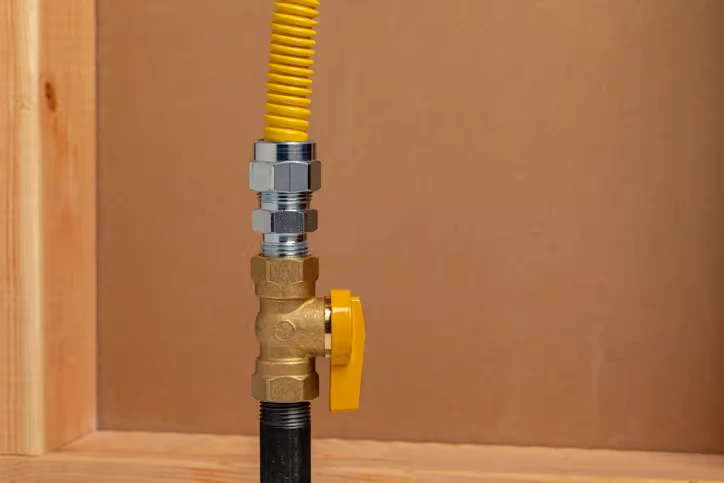
The straight answer: yes, absolutely
Yes, gas line work in Texas almost always requires a permit. And the work must be performed by a licensed plumber holding gas endorsement – not by a handyman, not by a general contractor, not by the homeowner themselves. This is not a gray area. The Texas Occupations Code Chapter 1301 governs plumbing licensure and requires a Responsible Master Plumber (RMP) license with gas endorsement for any gas line work. Every DFW municipality (Mesquite, Garland, Rowlett, Dallas, Plano, Richardson, Balch Springs, Sunnyvale) requires permits and inspections for gas line installations, repairs, modifications, and appliance connections.
Working on a gas line without a permit isn’t just a paperwork shortcut. It’s illegal under Texas law. It creates serious safety risks because the work isn’t inspected against the International Fuel Gas Code (IFGC) standards Texas has adopted. It typically voids homeowner’s insurance coverage for any subsequent damage. It can prevent home sale when buyers’ inspectors discover undocumented work. And in worst-case scenarios – a gas leak, fire, or explosion – it creates civil and criminal liability that follows the property owner.
This guide explains exactly what work requires a permit, why the permit and licensing requirements exist, the consequences of skipping permits, how the permit process actually works in DFW jurisdictions, how to verify your contractor is operating legally, and 2026 cost context for permitted work.
Key takeaways
- Yes, gas line work requires a permit in every DFW jurisdiction. This is non-negotiable under Texas Occupations Code Chapter 1301 and local building codes. Work that requires a permit includes new installation, repair, extension, capping, gas appliance installation, gas meter relocation, and CSST installation with proper bonding.
- Only a licensed plumber with gas endorsement can legally perform the work. The Responsible Master Plumber (RMP) holds the license; their crew operates under it. Handymen, general contractors, and DIY homeowners cannot legally do gas line work in Texas – this is a Class C misdemeanor at minimum and can escalate based on consequences.
- Inspections are required, not optional. Most jurisdictions require at least two inspections: a rough-in inspection (before walls/floors are closed) and a pressure test inspection (verifying the system holds 3 PSI for 10 minutes per IFGC 406.4 minimum). Some jurisdictions require additional inspections.
- Skipping permits has real consequences. Insurance denial for any damage caused by the work. Home sale problems when buyers and inspectors discover undocumented work. Forced retrofit at sale or insurance event. Stop-work orders if discovered during construction. Civil and criminal liability if the unpermitted work contributes to injury, death, or property damage.
- Atmos Energy may refuse to connect or reconnect gas service to work that wasn’t permitted and inspected. This can mean a home with no gas service until the work is brought into compliance – sometimes requiring opening walls and ceilings to demonstrate code compliance.
- Permit costs are modest compared to consequences. Typical DFW residential gas line permits run $50-$300 depending on scope and jurisdiction. The cost of doing it right is small; the cost of doing it wrong can be catastrophic.
- Call 214-918-6109 for gas line installation, repair, and inspection across Mesquite, Garland, Rowlett, Dallas, Plano, Richardson, Balch Springs, and Sunnyvale – all properly permitted under James Armstrong Plumbing Master Plumber License M-39428.
What gas line work requires a permit?
Essentially all of it. The specific work categories that require permits across DFW jurisdictions:
New gas line installation
Any new gas line – whether running gas to a new addition, installing a line to a new outdoor kitchen, or piping gas to a new appliance location – requires a permit. The permit application identifies the scope, materials, sizing, and intended appliance loads.
Gas line repair
Repairing a damaged gas line typically requires a permit. Some jurisdictions allow minor repairs (tightening a loose fitting on an accessible exposed line) without a permit, but the threshold is narrow and any work involving cutting, splicing, or replacing pipe sections requires permitting. When in doubt, the licensed plumber pulls the permit.
Gas line extension
Adding a new branch to an existing gas line – for example, running a new line to a gas fireplace from an existing system – requires a permit. The extension must be properly sized for the additional load and pressure-tested upon completion.
Gas appliance installation or replacement
Installing a new gas water heater, gas range, gas dryer, gas fireplace, gas grill connection, or pool heater typically requires a permit. The permit covers connection to the existing gas system, including verifying adequate gas pressure and pipe sizing at the connection point. Some jurisdictions have streamlined permit processes specifically for like-for-like appliance replacement.
Gas meter relocation
Moving the gas meter to a new location on the property requires a permit and coordination with Atmos Energy. This is typically done during major renovations or when site landscape changes require relocating utility connections.
Gas line capping or removal
Removing a gas appliance and properly capping off the gas line that served it requires a permit. The cap must be installed correctly to prevent future leaks. Some jurisdictions have simplified processes for this specific work.
CSST installation with bonding
Corrugated Stainless Steel Tubing (CSST) gas line installations require permits and have specific bonding requirements (per NFPA 54 Section 7.2.4, in effect since 2009). The bonding must be inspected by the jurisdiction inspector before the system is enclosed.
LP / Propane gas line work
Propane gas line work has its own additional requirements. LP installations often involve coordination with the propane supplier and have specific code requirements for tank placement, line sizing for the higher BTU content of propane, and shutoff valve locations.
What does NOT typically require a permit
- Simple tightening of an accessible fitting that was loose (some jurisdictions; verify with your jurisdiction)
- Replacing a flexible gas appliance connector (the short flexible line between the rigid pipe and the appliance) – some jurisdictions allow this without permit if done by a licensed plumber
- Routine maintenance like cleaning a burner orifice on an appliance
When in doubt, ask. The permit cost is modest; the cost of unpermitted work is not.
Why permits and licensing requirements exist
Safety – the primary reason
Gas line work has very low tolerance for error. A missed leak, an undersized line that creates pressure issues, an improperly installed shutoff valve, or a CSST installation without proper bonding can lead to fire, explosion, or carbon monoxide poisoning. The permitting and inspection process is the verification that the work meets the safety standards in the International Fuel Gas Code (IFGC) that Texas has adopted.
An inspector visiting a gas line installation isn’t a bureaucratic hassle – they’re confirming the work won’t kill someone six months from now. Pressure tests verify the system holds. Bonding inspections verify electrical safety on CSST systems. Final inspections verify the appliance connections are correct and properly secured.
Texas Occupations Code Chapter 1301
Texas state law governs plumbing licensure. The Texas State Board of Plumbing Examiners (TSBPE) issues licenses, including the Responsible Master Plumber (RMP) license required for gas line work. The license requires extensive training, examination, continuing education, and clean disciplinary record. The licensure system exists because gas work specifically requires expertise that takes years to develop.
Unlicensed plumbing work, including gas line work by anyone without a current RMP license with gas endorsement, is illegal in Texas. The penalties range from civil fines through criminal charges depending on the consequences of the unlicensed work.
Local building codes
Each DFW municipality adopts and amends building codes that include the International Fuel Gas Code with local modifications. The local code defines what requires a permit, what the permit process is, who can perform the work, what materials are acceptable, and what inspections are required. The local code is enforced by the city’s building department through the permit and inspection process.
Insurance compliance
Standard homeowner’s insurance policies typically include provisions requiring that work be performed in compliance with applicable codes and by appropriately licensed contractors. Damage caused by non-permitted work – even years after the work was done – is often excluded from coverage. The insurance company can document that the work wasn’t permitted, the homeowner can’t show it was inspected, and the claim is denied.
Resale and transfer
When a home is sold, the buyer’s inspector and the buyer themselves typically request records of permitted work. Title companies sometimes require permits for major systems work. Unpermitted gas line work discovered at closing can derail or delay the sale, require expensive retrofit and re-permitting, or result in price reductions to compensate for the issue.
Atmos Energy and utility coordination
Atmos Energy, the natural gas utility serving most of DFW, may refuse to provide service to or restore service to homes with non-permitted gas line work. They have the legal right to require code compliance documentation before connection. This can leave a home without gas service until the work is brought into compliance, which sometimes requires opening enclosed walls and ceilings to demonstrate the hidden work meets code.
Who can legally do gas line work in Texas?
The Responsible Master Plumber (RMP)
The RMP is the senior plumbing license in Texas, issued by the Texas State Board of Plumbing Examiners (TSBPE). The RMP carries personal responsibility for plumbing work performed under their license. Master Plumber James Armstrong holds RMP License M-39428.
The RMP can perform gas line work directly, or supervise journeymen plumbers and apprentices working under their license. The RMP is the responsible party for the permit, the work quality, and the code compliance.
Journeyman plumbers
Journeyman plumbers can perform gas line work under the supervision of an RMP. The journeyman license requires significant training and examination. The RMP’s license is what gets pulled on the permit, and the RMP bears responsibility for the work performed under their supervision.
Gas endorsement
Beyond the basic plumbing license, performing gas work requires gas endorsement. This is an additional credential indicating the licensee has demonstrated specific competency for gas systems. Both the RMP and any journeyman doing gas work must hold gas endorsement.
Who CANNOT do gas line work in Texas
- Handymen – regardless of experience, they cannot legally perform gas line work without RMP licensure
- General contractors – their license covers construction supervision but not the plumbing or gas work itself; they must subcontract to an RMP
- Electricians – their license is for electrical work; they cannot perform gas line work
- HVAC contractors – their license covers heating/cooling but not the gas piping itself in most jurisdictions; gas connections to HVAC equipment typically require an RMP or specific HVAC license additions
- Homeowners on their own property – despite some myths, homeowners in Texas CANNOT legally do gas line work on their own homes, even with the homeowner exemption that applies to some other building work
- “Friend who knows what they’re doing” – prior experience without current Texas RMP licensure is not legal qualification
The permit process – how it actually works
Step 1: Plumber pulls the permit
Before work begins, the licensed plumber submits a permit application to the local building department. The application identifies the property, the scope of work, the materials to be used, the appliances to be connected (with BTU loads), and the plumber’s RMP license number. The application typically includes a simple drawing showing the proposed work.
Step 2: Permit fee paid
The plumber (or homeowner, depending on arrangement) pays the permit fee. DFW jurisdiction permit fees for gas line work typically range $50-$300 depending on scope, with simple repair permits at the low end and major new installations at the high end. The fee covers the building department’s plan review, inspector time, and administrative costs.
Step 3: Plan review (when required)
For substantial work, the building department may review the plans before issuing the permit. Smaller scopes typically receive same-day or next-day permit approval. Major work may take a week or more for plan review.
Step 4: Permit issued
Once approved, the permit is issued. The permit must be posted at the work site (or available on-demand) during the work. The permit number is recorded against the property in the building department’s database.
Step 5: Work performed
The licensed plumber and their crew perform the work according to code. The work cannot be enclosed (covered by drywall, floor, ceiling materials) until the rough-in inspection is complete.
Step 6: Rough-in inspection
The plumber requests the rough-in inspection. The municipal inspector visits the site, examines the installation visually, and witnesses a pressure test. The standard pressure test per IFGC 406.4 is 3 PSI air pressure held for 10 minutes with no measurable pressure drop. The inspector signs off if the work passes. If issues are found, the plumber addresses them and re-inspection is scheduled.
Step 7: Bonding inspection (for CSST)
If CSST is used, the bonding inspection verifies proper electrical bonding to building electrical ground per NFPA 54 Section 7.2.4. This must pass before the system is enclosed.
Step 8: Walls and floors closed
After rough-in and bonding inspections pass, the work area can be closed up (drywall, flooring, finishes installed).
Step 9: Final inspection
The final inspection verifies the appliances are properly connected, shutoff valves are accessible, and the system is operationally tested. The inspector signs off and the permit is closed.
Step 10: Atmos Energy connection
For new installations or installations requiring meter changes, Atmos Energy is notified to inspect and connect the service. They may perform their own verification before connecting.
Step 11: Permit closure
The closed permit becomes part of the property’s permanent record. The records are accessible through the building department for future buyers, inspectors, and the homeowner themselves.
The consequences of skipping permits
Legal consequences
Performing or causing unlicensed plumbing work in Texas is a violation of Texas Occupations Code Chapter 1301. Penalties range from civil fines to Class C misdemeanor charges. If the unpermitted work contributes to injury or property damage, criminal charges can escalate to manslaughter or worse depending on the specific consequences.
Stop-work orders
If a city inspector discovers unpermitted gas line work in progress (during a different inspection at the same property, in response to a complaint, or during routine inspection of nearby permitted work), they can issue a stop-work order. The work must halt until proper permits are obtained, and the existing work may need to be uncovered and re-inspected.
Insurance denial
Standard homeowner’s insurance typically excludes damage caused by non-permitted, non-compliant work. A gas leak that causes fire damage might be denied coverage if the gas line work that contributed to the leak wasn’t permitted and inspected. The denial can affect not just the gas line repair cost but also the structural fire damage, contents damage, and temporary lodging costs.
Home sale problems
Buyers’ inspectors typically request permit records for major systems work. Unpermitted gas line work discovered at this stage commonly results in:
- Price reduction demands to cover the cost of retroactive permitting and inspection
- Required repair/replacement of the unpermitted work as a condition of sale
- Deal collapses if the seller can’t or won’t address the issue
- Disclosure obligations going forward – failure to disclose known unpermitted work can create legal liability
Atmos Energy service restrictions
Atmos Energy may refuse to provide new service to or restore service after a service interruption to homes with documented non-permitted gas work. The homeowner may need to bring all gas work into permitted compliance before service is restored.
Forced retrofit
To bring previously unpermitted work into compliance, the homeowner typically must: hire a licensed plumber to assess the existing work, expose enclosed work (open drywall, lift flooring) for inspection, retroactively obtain a permit, pass inspections, and document compliance. The cost of forced retrofit often exceeds 3-5x the cost of original proper permitting.
Civil and criminal liability
If non-permitted gas line work contributes to injury or death, the property owner can face civil lawsuits for damages and criminal charges for negligence. These liabilities follow the property owner regardless of who actually did the work – the property owner is responsible for ensuring work meets code.
DFW jurisdiction permit specifics
Mesquite
City of Mesquite Building Inspections Department issues plumbing permits. Online application available through the city’s permit portal. Permit fees vary with scope; typical residential gas line permits run $75-$250. Inspections scheduled through the building department. Inspectors typically respond within 1-3 business days.
Garland
City of Garland Permits and Inspections Department handles permitting. Garland’s process is similar to Mesquite’s with online application and similar fee structure. Garland’s inspectors are typically responsive to scheduling requests.
Dallas
City of Dallas Building Inspection issues permits through their online portal or in-person at the development services counter. Dallas’s process can be more involved than smaller jurisdictions due to volume; allow additional time for plan review on larger scopes. Permit fees for residential gas line work typically run $100-$400.
Plano
City of Plano Building Inspections Department. Online permit portal. Generally efficient permit process; Plano has a reputation for responsive inspections and clear requirements.
Richardson
City of Richardson Permits and Inspections. Similar process to other DFW jurisdictions. Generally efficient.
Rowlett
City of Rowlett Building Inspections. Streamlined process for smaller jurisdictions. Permit applications often processable within 1-2 business days.
Balch Springs
City of Balch Springs Building Permits. Smaller department with personalized service. May require in-person application for some permit types.
Sunnyvale
Town of Sunnyvale Building Inspections. Smaller community process. Permit application typically straightforward.
Variations and updates
Each jurisdiction updates its codes, procedures, and fees periodically. The licensed plumber should be current on each jurisdiction’s specific requirements. James Armstrong Plumbing works regularly across all DFW jurisdictions and maintains current knowledge of each jurisdiction’s processes.
How to verify your contractor is operating legally
Before signing a contract
Ask the contractor: “Will you be pulling a permit for this work? What’s your RMP license number? Is gas endorsement included?” A legitimate contractor responds clearly and provides the license number willingly. A contractor who hedges, says permits aren’t needed, or offers a “permit-free discount” is not the right contractor.
Verify the license
The Texas State Board of Plumbing Examiners maintains a public license verification database at tsbpe.texas.gov. Enter the contractor’s name or license number and verify: the license is current, the licensee has gas endorsement, and there are no recent disciplinary actions.
Verify the permit
Most DFW jurisdictions allow online permit lookup. After your contractor tells you the permit has been pulled, look it up in the jurisdiction’s permit database to verify it exists and matches your address.
Verify inspections happened
After rough-in and final inspections, verify they were performed and passed. The inspector should sign off on the permit. Your contractor should provide you with documentation of permit closure.
Keep documentation
File the permit number, the plumber’s license number, inspection records, and any related documentation with your home records. These will be requested if you sell the home, if you have an insurance claim, or if you have any future issue with the gas system.
2026 DFW pricing context
Permit fees (paid to the jurisdiction)
- Simple gas line repair permit: $50-$150
- Gas appliance installation permit: $75-$200
- New gas line installation permit: $150-$400
- Major gas system work permit: $300-$1,000+
Inspection coordination
Inspection scheduling and rescheduling is typically included in the permit fee. Most jurisdictions perform inspections within 1-3 business days of request.
Plumber labor (including permit pulling)
- Service call/diagnostic: $89-$200
- Simple gas line repair (with permit and inspections): $400-$1,200
- Gas appliance installation (with permit): $300-$800 (appliance separate)
- New gas line installation: $800-$3,500+ depending on length and complexity
- Gas line extension: $500-$2,000+
- Gas meter relocation: $1,500-$5,000+
- CSST installation with bonding: $1,000-$3,500+
The retrofit math
Bringing previously unpermitted gas work into compliance typically costs 3-5x the original permit-compliant cost. Exposing enclosed work, re-inspecting hidden installations, replacing components that don’t meet current code, paying retroactive permit fees, and the labor to coordinate all of it adds up quickly. The economic case for doing it right the first time is overwhelming.
A 30-year DFW perspective on gas line permits
The patterns we see most often: homeowners hire a handyman to do a “simple” gas line job, save a few hundred dollars compared to a licensed plumber, and then face thousands of dollars in retrofit costs when they sell the home or have an insurance issue. The savings disappear quickly when the consequences materialize.
Another common pattern: homeowners do their own gas appliance installation thinking the connection is straightforward, and create a slow leak that goes undetected for months until it causes a much bigger problem. The cost of professional installation – including permit and inspection – was a fraction of the eventual remediation cost.
The middle path is straightforward: hire a licensed plumber, let them pull the permit, let the inspector verify the work, and have documentation of compliance. This is what the system is designed for. The system works when used correctly. Skipping any part of it is the recipe for problems.
What surprises some homeowners is that the permit process is actually quick and easy for routine work. A gas water heater replacement typically gets permit approval within a day, inspections within 1-3 days, and complete documentation within a week. The “hassle” of permitting is largely a myth – it’s no more burdensome than other parts of the project.
What separates the homeowners who never have issues from those who do is the discipline to always insist on proper permitting and documentation. The proper question to ask a contractor isn’t “do I need a permit?” – it’s “what’s your license number and when will you pull the permit?” That single question shifts the conversation correctly.
When should you call James Armstrong Plumbing?
Call 214-918-6109 if any of the following apply:
- You’re planning any gas line work and want a properly licensed, properly permitted contractor
- You’re installing a new gas appliance (water heater, range, fireplace, dryer, pool heater)
- You bought a home and want to verify the gas line work is properly documented
- You discovered previously unpermitted gas line work and need to bring it into compliance
- You want a gas line safety inspection without specific repair work in mind
- You experienced gas line freeze damage or other issues during the February 2021 storm
- You’re considering converting from electric to gas appliances
- You smell gas – leave the building immediately, call 911 and Atmos Energy 866-322-8667 from a safe distance, then call us for assessment after the immediate threat is resolved
Master Plumber James Armstrong (License M-39428 with gas endorsement, BBB A+ since 2018) and the JAP team perform gas line installation, repair, modification, and appliance connection across DFW – all properly permitted and inspected. For related guides, see comprehensive gas line repair and installation guide and water heater services. Service areas: Mesquite, Garland, Rowlett, Dallas, Plano, Richardson, Balch Springs, and Sunnyvale.
Frequently asked questions
Do you need a permit for gas line plumbing?
Yes, almost always. Texas Occupations Code Chapter 1301 and every DFW municipal building code require permits for gas line work including new installation, repair, extension, capping, gas appliance installation, gas meter relocation, and CSST installation. The work must also be performed by a licensed Responsible Master Plumber (RMP) with gas endorsement. Working without a permit is illegal, unsafe, voids insurance, creates resale problems, and can result in service refusal from Atmos Energy.
Can I do my own gas line work in Texas?
No. Texas does not have a homeowner exemption for gas line work. Even on your own property, you cannot legally do gas line work without the appropriate plumbing license with gas endorsement. This is different from some other home improvement work where Texas does allow homeowner work without licensing. Gas line work specifically requires a licensed Responsible Master Plumber – no exceptions.
What happens if I get caught doing gas line work without a permit?
Consequences range from civil fines through criminal charges depending on the specifics. Class C misdemeanor charges are common. Stop-work orders if discovered during construction. Forced retrofit at significant expense to bring the work into compliance. Insurance complications. If the unpermitted work contributes to injury or property damage, charges can escalate substantially. The property owner is generally responsible regardless of who actually performed the work.
How much does a gas line permit cost in DFW?
Typical 2026 DFW residential gas line permits cost $50-$400 depending on scope and jurisdiction. Simple repair permits at the low end ($50-$150). Gas appliance installation permits in the middle ($75-$200). New gas line installation permits at the higher end ($150-$400). Major commercial or complex residential work can exceed $1,000. These permit fees are paid to the local municipality and are separate from the plumber’s labor and material costs.
How long does the permit process take?
For routine gas line work in most DFW jurisdictions: permit approval within 1-2 business days, rough-in inspection within 1-3 days of request after work is complete, final inspection within 1-3 days of request after the system is operational. The complete process from start to permit closure typically takes 1-3 weeks depending on scope and inspector availability. Major work involving plan review can take longer.
Does Atmos Energy require permits for gas line work?
Effectively yes. Atmos Energy may refuse to connect or restore gas service to homes with documented non-permitted gas line work. While Atmos doesn’t issue permits themselves, they require code compliance documentation in many cases – and the permit and inspection records are that documentation. Working without permits can result in a home without gas service until compliance is achieved.
What’s the difference between a plumber and a master plumber?
In Texas, the Master Plumber license (specifically the Responsible Master Plumber or RMP) is the senior plumbing license. A journeyman plumber is licensed but works under the supervision of an RMP. The RMP holds the personal responsibility for the work performed under their license, pulls the permits, and is the contact for the licensing board. For gas line work specifically, the licensed plumber (RMP or journeyman) must also hold gas endorsement.
How do I verify my plumber is licensed in Texas?
The Texas State Board of Plumbing Examiners (TSBPE) maintains a public license verification database at tsbpe.texas.gov. Enter the plumber’s name or license number to verify the license is current, the type of license they hold, and any disciplinary history. For gas line work, verify they have gas endorsement. James Armstrong Plumbing operates under Master Plumber License M-39428 with gas endorsement.
What inspections are required for gas line work?
Typical DFW residential gas line work requires two main inspections: rough-in inspection (visual inspection plus pressure test, before the work is enclosed by drywall or finishes) and final inspection (after appliance connections are made and the system is operational). CSST installations also require a bonding inspection (verifying proper electrical bonding per NFPA 54 Section 7.2.4). The standard pressure test holds the gas system at 3 PSI for 10 minutes per IFGC 406.4 minimum, with no measurable pressure drop allowed.
What if a previous owner did unpermitted gas line work in my home?
This is unfortunately common, particularly with handyman-installed gas appliances. To bring the work into compliance: hire a licensed plumber to inspect the existing work, obtain a retroactive permit (some jurisdictions have specific processes for this), expose enclosed work for proper inspection if needed, pay the permit fee and any code-compliance retrofit costs, and pass inspection. The retrofit cost is typically 3-5x what proper original permitting would have cost. Discovering unpermitted work after purchase is grounds for a complaint or claim against the previous owner in some cases – consult an attorney about your specific situation.
This guide reflects 2026 Texas plumbing licensure requirements and typical DFW jurisdiction permit processes. Specific permit fees, processing times, and procedures vary by jurisdiction and change over time. Verify current requirements with your local building department and the licensed plumber performing the work.