
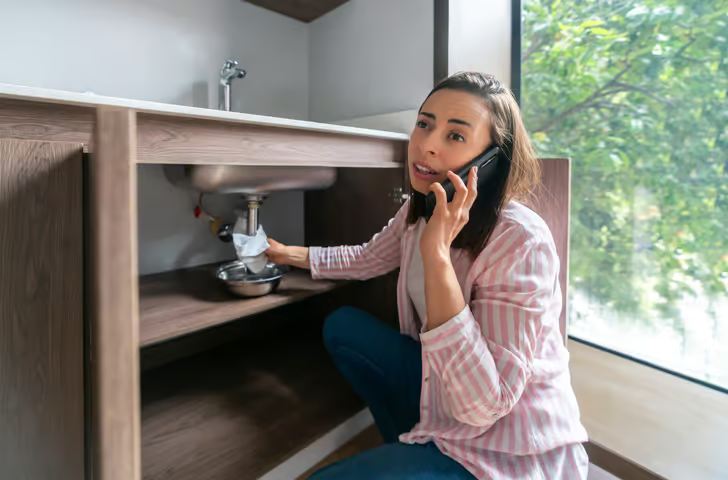
What commercial emergency plumbing installation actually means
Emergency plumbing installation in commercial settings is distinct from emergency repair, routine maintenance, and planned new construction. It’s the rapid replacement of failed plumbing equipment or installation of newly-required equipment when business operations, code compliance, or property condition demand it within hours or days rather than weeks. The water heater bank that failed Friday night with a restaurant prep crew expected Saturday morning. The backflow preventer that ruptured in a February freeze and is preventing the office building from passing its annual health department inspection. The grease trap the health inspector flagged on Wednesday with continued operation contingent on installation by the following Wednesday. These aren’t routine projects with leisurely planning timelines – they’re business-critical installations with compressed schedules and meaningful consequences for delay.
Commercial emergency installation differs fundamentally from residential emergency response in several ways. The equipment is larger, more expensive, and often not stocked locally. Permits are typically required even when speed matters. Inspection sequences add days even to well-coordinated projects. Health code compliance applies in food service and medical settings. ADA requirements apply when restroom or accessibility equipment is involved. Multi-tenant buildings require coordination across property management, building owners, tenant operations, and sometimes neighboring properties. After-hours scheduling becomes the norm rather than the exception to minimize business disruption. Insurance and liability considerations shape decisions that homeowner emergencies don’t involve.
This guide explains commercial emergency plumbing installation for property managers, facility managers, business owners, and commercial real estate professionals across DFW. It covers the eight most common emergency installation scenarios, the seven major ways commercial differs from residential, the typical installation process and timeline, the compliance frameworks that govern the work, and what to expect for pricing in 2026 market conditions. The objective is informational – so you understand what’s actually involved when commercial plumbing emergencies require installation rather than repair.
Key takeaways
- Commercial emergency installation differs fundamentally from residential. Larger equipment, longer lead times, permits even for emergencies, inspection requirements, multiple compliance frameworks, and business continuity priorities reshape the entire process.
- Permits are typically required even for emergency installation. Some jurisdictions allow retroactive permits for true emergencies; others require pull-before-work even with compressed timelines. Operating without permits creates regulatory liability that exceeds the original problem.
- Commercial equipment often isn’t stocked locally. 100-gallon commercial water heaters, RPZ backflow assemblies, grease interceptors above 100 gallons, and similar equipment have lead times of 1-7 days even when designated “emergency.” Inventory planning matters.
- Health department, ADA, and TCEQ compliance shape installation decisions beyond what the original problem might suggest. Replacing failed equipment with non-compliant equipment creates regulatory exposure even when the immediate operational problem is solved.
- Business continuity drives commercial emergency response. The cost of downtime usually exceeds the premium for emergency response – making “wait until normal hours” calculations work out very differently than residential. After-hours and weekend installation become standard.
- The February 2021 freeze damaged commercial plumbing systems at scale across DFW. Many commercial properties have weakened components – especially backflow preventers and exterior piping – that continue to fail in 2026 service calls.
- Documentation requirements are extensive in commercial emergency installation. Permits, inspections, manufacturer certifications, warranty documentation, and code compliance records support insurance claims, future property transactions, and ongoing regulatory compliance.
- Call 214-918-6109 for commercial emergency plumbing installation across Mesquite, Garland, Rowlett, Dallas, Plano, Richardson, Balch Springs, and Sunnyvale – 24/7 response with Master Plumber License M-39428 and gas endorsement for full commercial scope.
The eight most common commercial emergency installation scenarios
1. Commercial water heater bank failure
Commercial water heater installations frequently use multiple tanks (banks of 75-, 100-, or 120-gallon heaters) to meet hot water demand. Failure of one tank can compromise the entire bank’s hot water output. In restaurants, hotels, gyms, laundries, and similar high-demand environments, this creates immediate operational impact.
Emergency installation typically involves: isolating the failed tank, replacing it with an equivalent or upgraded unit, retesting the bank’s combined operation, verifying gas/electrical connections per code, and pulling appropriate permits. Replacement equipment lead times of 1-3 days are common; in true emergencies plumbers may install temporary smaller capacity equipment to maintain partial operation while permanent equipment is sourced.
2. Backflow preventer assembly failure
Reduced Pressure Zone (RPZ) backflow preventers protect potable water supplies from contamination by preventing reverse flow from commercial water systems back into the municipal supply. They’re required at most commercial properties and many residential properties with irrigation or fire suppression systems. RPZ assemblies are also vulnerable to freeze damage – the February 2021 freeze damaged thousands of RPZ assemblies across DFW that continue surfacing as emergencies.
RPZ failure creates multiple emergencies simultaneously: visible water leakage from the assembly, potential health department compliance violation, water service that must be shut off until replacement, business operation disruption. Emergency replacement requires: isolation valve operation, removal of failed assembly, installation of code-compliant replacement (matching size and type for the application), testing and certification by a licensed backflow tester, and documentation for the water purveyor and health department.
3. Grease trap or grease interceptor compliance installation
Food service establishments are required to install and maintain grease traps or larger grease interceptors that prevent fats, oils, and grease (FOG) from entering the municipal sewer system. The City of Mesquite and other DFW jurisdictions enforce FOG ordinances with potential business operation consequences for non-compliance.
Emergency installation scenarios: health inspector flags inadequate or failing grease trap during routine inspection; existing grease trap fails structurally and creates immediate compliance issue; expansion or menu changes have increased FOG production beyond the existing trap’s capacity; renovation work requires upgraded grease handling. Emergency response involves: capacity calculation based on fixture units and operation type, equipment selection (passive grease trap vs active grease interceptor vs gravity grease interceptor), installation including potential site work, inspection and certification, documentation submission to the jurisdiction.
4. Sewer ejector pump failure
Commercial buildings with restrooms or fixtures below the municipal sewer connection point rely on ejector pumps (also called lift stations in larger installations) to lift wastewater to the main sewer line. Pump failure causes immediate sewage backup, business closure of affected areas, and potential biohazard cleanup requirements.
Emergency replacement involves: assessing pump capacity requirements based on flow rates and lift height, sourcing replacement pump (often duplex installations with backup pump for redundancy), installation with electrical connection verification, alarm system integration (so future failures are detected before backup occurs), discharge piping verification, testing under load. Pump lead times can extend installation timelines; temporary portable pumping equipment may be deployed while permanent equipment is sourced.
5. Booster pump failure
Multi-story commercial buildings often require booster pumps to deliver adequate water pressure to upper floors. Pump failure causes immediate pressure loss to affected areas, impacting fixtures, fire suppression systems, and HVAC equipment that uses building water.
Emergency replacement involves: assessing pressure and flow requirements, sourcing appropriate pump (sometimes variable frequency drive pumps for energy efficiency), installation with electrical and mechanical connections, pressure testing, control system verification. In larger buildings, redundant pump installations are standard to allow planned maintenance without service interruption.
6. Main water service line damage
Commercial main water service line damage from vehicle impact, excavation accident, freeze damage, or aged-pipe failure creates immediate water service loss to the entire property. Business operation depends on rapid restoration. Emergency response involves: coordination with the water purveyor, excavation and exposure of damaged section, repair or replacement decision based on damage extent and pipe age, installation with code-compliant materials and methods, pressure testing, backfill and restoration, inspection and approval.
Complex situations involve: traffic management for street excavation, coordination with other underground utilities, easement compliance, soil conditions affecting installation methods. Lead times vary based on damage location and accessibility.
7. Major fixture failure in high-traffic restrooms
Public restrooms in commercial settings experience high-volume use that accelerates fixture wear beyond residential patterns. Fixture failures (flush valves, urinals, sensor faucets, hand dryers if plumbing-connected) in high-traffic restrooms create immediate operational impact and ADA compliance concerns if the failure affects accessible fixtures.
Emergency replacement involves: temporary fixture out-of-service signage and access restriction, sourcing of code-compliant replacement (often manufacturer-specific to match existing installation), installation with ADA-compliant clearances and operations verification, testing under operation patterns expected. In airport, stadium, hospital, and similar high-traffic settings, redundant fixture installation is standard so single-fixture failure doesn’t close the restroom.
8. Process water or specialized equipment failure
Industrial light and specialized commercial operations (medical, dental, manufacturing, food production) often have process water requirements distinct from standard potable water. Equipment failures in these systems can stop business operations and create compliance issues with regulatory bodies (FDA for food, state dental boards, state medical boards, EPA, TCEQ).
Emergency response requires specialized knowledge of the operation type and applicable regulations. Equipment may require source equipment specifications, certification documentation, regulatory notifications, and specialized testing protocols. Lead times often extend due to specialized equipment availability.
Seven major ways commercial differs from residential
1. Equipment scale and sourcing
Residential plumbing emergencies typically involve equipment available at any plumbing supply or big-box store within hours. Commercial equipment often requires special order: 100+ gallon water heaters, RPZ backflow assemblies above 1.5″ size, grease interceptors above 100 gallons, commercial fixtures (flushometers, sensor faucets) matching specific manufacturer installations. Lead times of 1-7 days are normal even for emergency situations.
2. Permits and inspections
Residential emergencies often proceed under “emergency repair” provisions that allow same-day work with retroactive permit pulling. Commercial work typically requires pre-work permits even in emergency situations, though some jurisdictions have abbreviated emergency permit procedures. Inspection requirements at multiple stages (rough-in, water test, gas test, final) add days to the project timeline beyond installation labor.
3. Code compliance complexity
Commercial installations must comply with: International Plumbing Code (IPC) as adopted by Texas and modified by local jurisdictions; Texas Plumbing Code; municipal building codes; health department requirements (food service, medical); ADA Standards for Accessible Design; TCEQ wastewater regulations; sometimes specialized regulations (NFPA for fire suppression interfaces). The intersection of these codes shapes installation decisions in ways residential work doesn’t involve.
4. Multi-tenant coordination
Multi-tenant buildings require coordination across multiple stakeholders: building owner, property management, individual tenants, sometimes neighboring properties (for shared utilities). Notifications, access arrangements, work timing, and impact mitigation all involve coordination work that residential projects don’t require. This coordination overhead is often more time-consuming than the technical installation work.
5. After-hours and weekend scheduling
Residential emergencies are typically addressed during normal hours when possible to minimize cost. Commercial emergencies frequently require after-hours, overnight, or weekend installation to minimize business disruption. The premium for off-hours work is offset by reduced operational impact – the business calculation usually favors the off-hours premium.
6. Insurance and liability
Commercial plumbing work involves significantly higher liability exposure than residential. Plumbers carry larger liability policies for commercial work. Contracts include detailed scope, exclusions, warranties, and limitation of liability provisions. Documentation requirements are extensive to support claims and protect all parties in case of subsequent issues.
7. Documentation and record-keeping
Commercial installations require extensive documentation: permits and inspections; manufacturer warranty documentation; equipment certifications (especially backflow preventers, grease traps); maintenance records establishing baseline condition; photographic documentation of installation. This documentation supports insurance claims, regulatory compliance, future property transactions, and warranty enforcement.
The commercial emergency installation process
Stage 1: Initial assessment
The plumber assesses the failed equipment, the operational impact, the regulatory implications, and the installation requirements. This usually happens within 1-4 hours of the initial call. Outcomes: temporary mitigation if possible, equipment specification for replacement, timeline estimate, preliminary cost estimate.
Stage 2: Temporary mitigation if applicable
Many commercial emergencies allow temporary mitigation that maintains partial operation while permanent installation is arranged: temporary capacity from portable equipment, isolation of failed components allowing partial system operation, alternative arrangements (rented portable water heaters, portable sewer pumping equipment, alternative fixture availability). Mitigation buys time for proper permanent installation.
Stage 3: Permit and equipment
The plumber pulls necessary permits, sources replacement equipment, schedules inspections, and coordinates with affected parties. This stage takes 1-7 days depending on jurisdiction speed and equipment availability. The duration is often longer than the actual installation work.
Stage 4: Installation
The installation itself, depending on scope, typically takes 4 hours to 3 days. Complex installations (large water heater banks, RPZ assemblies in difficult locations, ejector pump installations requiring confined space work) extend toward the longer end.
Stage 5: Testing and inspection
All commercial installations require testing: pressure testing for water lines, leak testing for gas lines per IFGC 406.4, capacity testing for water heaters and pumps, functional testing for backflow preventers (by licensed backflow testers), code inspection by jurisdiction inspector.
Stage 6: Documentation and handover
Final documentation provided to the property owner/manager: permits and inspection signoffs, equipment manuals and warranty information, certification documents (especially for backflow assemblies, grease traps), maintenance recommendations, photographic records of completed work.
Compliance frameworks for commercial installations
Texas Plumbing Code (based on International Plumbing Code)
Texas adopts the International Plumbing Code (IPC) with state-specific modifications. The IPC governs: pipe sizing, fixture installation, drainage and vent systems, water heater installation, backflow prevention, indirect waste connections. Local jurisdictions can adopt additional modifications. Compliance is verified through permitting and inspection.
Mesquite and DFW municipal codes
Each DFW municipality has specific building codes with local modifications. Mesquite enforces FOG (fats, oils, grease) ordinances for food service. Dallas, Plano, Richardson, and other municipalities have their own specific requirements. Commercial installations must comply with the applicable jurisdiction’s code as adopted.
Health department requirements
Food service establishments are inspected by county health departments (Dallas County, Collin County, depending on location). Health code requires: adequate hot water (typically 110°F minimum at handwashing fixtures, 110°F minimum for warewashing), code-compliant grease handling, backflow protection of potable water from contamination, accessible handwashing fixtures, sewer connections without cross-connection risk.
Texas Commission on Environmental Quality (TCEQ)
TCEQ regulates wastewater discharge for commercial properties. Requirements include: backflow prevention to protect public water supply, grease handling for food service, industrial wastewater pretreatment for applicable industries, certified backflow testing programs.
ADA Standards for Accessible Design
Federal ADA standards govern accessibility of restroom fixtures, drinking fountains, and other plumbing-connected accessibility equipment. Commercial installations affecting accessible fixtures must comply with ADA requirements including: clearances, mounting heights, operation forces, fixture types, signage. ADA compliance often shapes replacement decisions beyond what the original equipment required.
The February 2021 freeze legacy in commercial plumbing
The February 2021 Texas freeze damaged commercial plumbing systems at scale across DFW. The damage patterns continue to surface as emergencies in 2026 service calls:
Backflow preventer damage
RPZ backflow assemblies on commercial properties are typically installed outside or in unheated mechanical rooms, making them vulnerable to freeze damage. Many were damaged in 2021. Some failed immediately; others held initially and have failed progressively in the years since. Many DFW commercial properties have backflow preventers that should be inspected or replaced preventively.
Exterior piping damage
Commercial buildings often have exterior piping (rooftop equipment, exterior fixtures, irrigation systems) that experienced freeze damage. Some damage was repaired immediately; some persists as ongoing leaks or developing failures.
Equipment damage
Commercial water heaters, booster pumps, and ejector pumps that froze during the 2021 event have failed progressively. The damage from freeze-thaw cycles compounds over time, leading to delayed-onset failures years after the original event.
Underground service line damage
Soil movement during the freeze damaged some underground service lines. Some failures occurred immediately; others persist as slow leaks that become emergencies when they progress to substantial flow.
Recommended response
Commercial properties that experienced 2021 freeze damage benefit from comprehensive plumbing system assessment to identify weakened components before they fail. The cost of preventive replacement during normal hours is dramatically less than emergency replacement at 2 AM during operations. This is especially true for backflow preventers, which require certified testing in any case.
2026 DFW commercial emergency installation pricing
Service call and emergency response
- Commercial emergency service call (after-hours): $300-$800
- Weekend/holiday emergency premium: $500-$1,200
- Site assessment and specification: $300-$1,000 (often credited against installation)
Common installation pricing (equipment + labor, excluding permits)
- Commercial water heater 75-100 gallon replacement: $3,500-$8,000
- Commercial water heater bank (multiple tanks): $10,000-$35,000+
- RPZ backflow preventer replacement (1″ to 2″): $1,500-$5,000
- RPZ backflow preventer replacement (4″ and larger): $5,000-$15,000+
- Grease trap installation (under-counter): $1,500-$4,000
- Grease interceptor installation (1,000+ gallon exterior): $8,000-$25,000+
- Sewer ejector pump replacement (residential-scale commercial): $2,500-$6,000
- Sewer ejector pump replacement (large commercial duplex): $8,000-$30,000+
- Booster pump replacement: $3,000-$15,000+
- Main water service line repair/replacement: $5,000-$25,000+ depending on length and access
- High-volume commercial fixture replacement: $400-$1,500 per fixture
Permits and certifications
- Commercial plumbing permits: $200-$1,500+ depending on jurisdiction and scope
- Backflow assembly certification testing: $150-$400 per assembly
- Grease trap permit and inspection: $200-$600
- Site work permits (excavation, traffic): vary widely by jurisdiction and scope
Major project scope
- Multi-equipment emergency replacements: $25,000-$150,000+
- Major freeze-damage restoration: $50,000-$500,000+
- Process water or specialized equipment emergencies: highly variable based on industry
How to work effectively with your commercial plumber
Before emergencies happen
- Establish relationships with commercial plumbers before emergencies. Knowing who to call and being known by your plumber reduces response delays.
- Schedule annual plumbing system inspection to identify developing issues. Many emergencies have warning signs in months prior.
- Maintain documentation of your plumbing systems: as-built drawings, equipment specifications, maintenance records.
- Verify backflow assembly certifications are current. Annual testing is required; lapses create regulatory exposure.
- Address freeze damage comprehensively if your property experienced 2021 issues that weren’t fully resolved.
During an emergency
- Contact your plumber immediately – don’t wait for normal hours unless the situation truly allows it
- Document the situation with photos, time-stamped notes, witness accounts
- Notify property management and affected tenants per established communication protocols
- Be available for decisions – emergency installations often require rapid decisions about scope, equipment selection, scheduling
- Maintain records of expenses for insurance claims
After installation
- Verify all documentation is complete: permits, inspections, manuals, warranties
- Establish maintenance schedule for new equipment
- Conduct post-installation review to identify any preventable factors
- Update your facility records with new equipment information
A 30-year DFW perspective on commercial emergency installation
The pattern we see most often in commercial emergencies: warning signs existed for weeks or months before the actual emergency. The water heater that wasn’t producing adequate hot water for the last six months and was attributed to “normal aging.” The backflow preventer that wasn’t tested in 2.5 years because the testing company stopped responding. The grease trap that was overflowing during peak service but was emptied by staff rather than reported for capacity assessment. The slow pressure decline on the third floor that was attributed to “old building issues.” Then the emergency happened, often at the worst possible time.
The opposite pattern – commercial properties with consistently fewer emergencies – have characteristic practices. They schedule annual inspections of all major plumbing equipment. They address smaller issues promptly. They maintain documentation of their systems. They establish relationships with qualified plumbers before emergencies. They invest modestly in prevention rather than emergency premiums. The total cost of plumbing across the property life is dramatically lower for these properties even though they “spend more” on prevention.
The 2021 freeze created a one-time massive demand for commercial emergency installation across DFW. Plumbers were overwhelmed; lead times for equipment extended to weeks; many commercial properties operated with degraded plumbing systems for extended periods. The lessons from 2021 remain valuable: weather-related freeze events will happen again; properties that maintain comprehensive plumbing systems with adequate redundancy come through better than those that don’t; backflow preventer protection deserves particular attention given vulnerability to freeze damage.
For 2026 and beyond, the considerations are: many commercial properties have aging plumbing systems approaching end-of-service-life; the 2021 freeze legacy continues surfacing as emergencies; regulatory requirements continue to evolve (especially around water conservation and PFAS); equipment lead times remain longer than historically. Proactive planning and maintenance pay larger dividends now than they did 10 years ago.
When should you call James Armstrong Plumbing for commercial emergency installation?
Call 214-918-6109 for any of the following:
- Active commercial plumbing emergency requiring rapid installation response
- Commercial water heater failure or capacity issues
- Backflow preventer failure or replacement
- Grease trap compliance issues or installation requirements
- Sewer ejector pump or booster pump failure
- Main water service line damage or failure
- Health department or regulatory inspection findings requiring emergency installation
- Post-freeze damage assessment for commercial properties
- Comprehensive commercial plumbing system inspection
- Establishing emergency response protocols for your commercial property
- Pre-occupancy plumbing inspection for new commercial leases or acquisitions
Master Plumber James Armstrong (License M-39428 with gas endorsement, BBB A+ since 2018) and the JAP team provide commercial plumbing services across DFW including emergency installation, scheduled installation, repair, inspection, and certification work. For broader service overview, see our Mesquite commercial plumbing services page. Related guides: gas line emergencies, general plumbing emergencies. Service areas: Mesquite, Garland, Rowlett, Dallas, Plano, Richardson, Balch Springs, and Sunnyvale.
Frequently asked questions
What’s the difference between commercial and residential emergency plumbing?
Commercial work involves larger equipment with longer lead times, more extensive code compliance (IPC, health department, ADA, TCEQ), multi-tenant coordination, after-hours scheduling to minimize business disruption, more extensive documentation, higher liability exposure, and business continuity considerations that don’t apply residentially. Equipment that’s stocked locally for residential (40-gallon water heaters, residential backflow devices) often requires special order in commercial sizes (100-gallon water heaters, RPZ assemblies above 1.5″). Permits are typically required even for emergency work.
Do I need permits for emergency commercial plumbing installation?
Yes, in nearly all DFW jurisdictions. Some jurisdictions allow retroactive permits for true emergencies; others require pre-work permits even with compressed timelines. The licensed plumber pulls the permit and coordinates inspection. Operating commercial plumbing equipment without proper permits creates regulatory liability that compounds the original problem and affects property transactions, insurance claims, and ongoing compliance.
How long does commercial emergency installation typically take?
The timeline includes: assessment (1-4 hours), temporary mitigation if applicable (same day), permit and equipment sourcing (1-7 days), installation (4 hours to 3 days for typical scopes), testing and inspection (1-3 days). Total: 3-14 days for typical commercial emergency installations. Major projects extend longer. Equipment lead time is often the binding constraint, not labor.
How much does commercial emergency plumbing installation cost in DFW?
2026 DFW pricing varies dramatically with scope. Emergency service call: $300-$800 (after-hours), $500-$1,200 (weekend/holiday). Common installations: commercial water heater $3,500-$8,000; RPZ backflow $1,500-$15,000+; grease trap $1,500-$25,000+; sewer ejector pump $2,500-$30,000+; booster pump $3,000-$15,000+; main service line $5,000-$25,000+. Major emergency projects: $25,000-$500,000+ depending on scope. Permits add $200-$1,500+ to project costs.
Why does commercial equipment have such long lead times?
Commercial plumbing equipment is often manufactured to order or held in limited stock by distributors. 100-gallon water heaters, RPZ backflow assemblies above 1.5″, grease interceptors above 100 gallons, large sewer pumps, and specialized equipment have 1-7 day lead times even when designated emergency. Stock that residential plumbing supply houses carry doesn’t include these sizes. Plumbers maintain relationships with multiple distributors to optimize sourcing speed.
Can you keep my business operating during emergency installation?
Often yes, through some combination of: temporary mitigation equipment (portable water heaters, portable pumping, alternative arrangements), phased installation that maintains partial operation, after-hours installation when business operations don’t conflict, isolation of affected sections allowing other operations to continue. The specific approach depends on the equipment and business operation. We discuss options during initial assessment.
What documentation should I keep for commercial plumbing work?
Permits and inspection signoffs; equipment manuals and warranty documentation; certification documents for regulated equipment (backflow assemblies, grease traps); photographic records of installations; maintenance records establishing baseline conditions and ongoing care; invoices and service records. This documentation supports insurance claims, regulatory compliance, future property transactions, warranty enforcement, and ongoing maintenance planning. We provide complete documentation at installation completion.
Did the 2021 freeze damage commercial plumbing systems?
Yes, significantly. The February 2021 Texas freeze damaged commercial plumbing across DFW at scale. The damage patterns continue surfacing in 2026 service calls: backflow preventer failures (most common – assemblies are typically installed outside or in unheated areas), exterior piping failures, equipment damage from freeze-thaw cycles, underground service line damage. Commercial properties that experienced 2021 damage benefit from comprehensive assessment to identify weakened components before they fail during operations.
How do I prepare my commercial property for plumbing emergencies?
Establish relationships with qualified commercial plumbers before emergencies. Schedule annual comprehensive plumbing inspection. Maintain documentation of your plumbing systems including as-builts and equipment specifications. Verify backflow assembly certifications are current (annual testing required). Address freeze damage from 2021 if not fully resolved. Identify shutoff valve locations and verify they operate. Brief property management staff on emergency response protocols. Maintain emergency contact lists for plumbers, restoration companies, insurance carriers, and regulatory contacts.
What if my emergency requires equipment that isn’t immediately available?
Commercial emergencies often require equipment with 1-7 day lead times. Standard approach: temporary mitigation maintaining partial operation during the lead time period (portable water heaters, portable pumps, alternative arrangements). Equipment sourcing from multiple distributors to optimize speed. Sometimes equipment substitution where regulations allow (different manufacturer, different model that meets specifications). The plumber communicates timeline expectations during initial assessment so business decisions can be made with realistic information.
This guide reflects 2026 DFW commercial emergency plumbing installation practices, code compliance requirements, and market pricing. Specific situations vary with property type, equipment scope, jurisdiction, and emergency severity. For active emergencies, call 214-918-6109 for 24/7 response.