
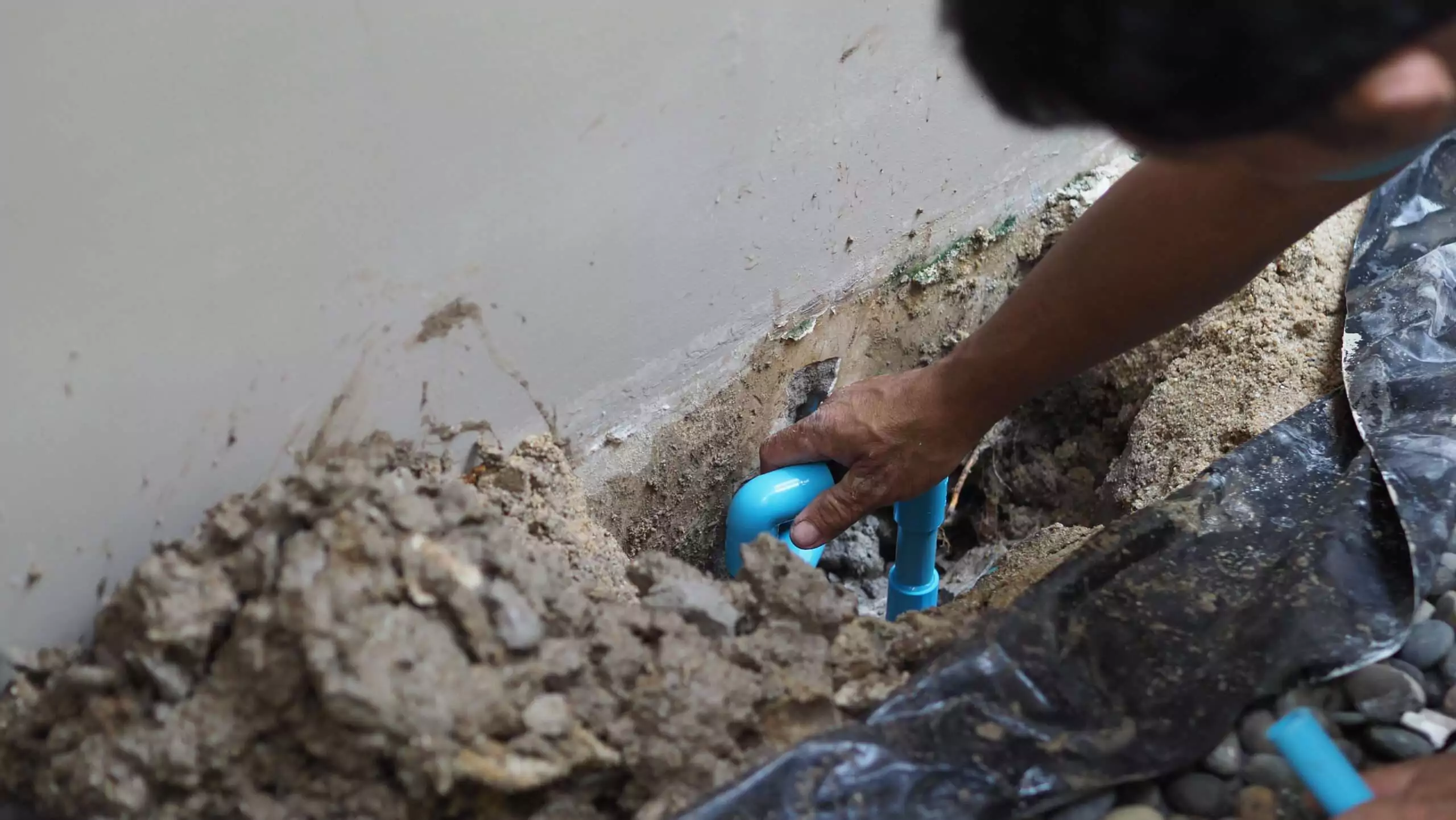
Key Takeaways
- A slab leak is a water leak in the supply lines running under the concrete foundation of your home. In DFW, slab leaks are common in 1960s-1980s homes with copper supply lines routed through or under the slab.
- The warning signs include warm floor spots (hot water line leak), unexplained water bill spikes, sound of running water when nothing is on, damp flooring, and new foundation cracks. Any single sign warrants professional evaluation.
- Detection costs $150 to $600 in DFW. Standard repair (spot repair or reroute) costs $1,500 to $5,000. Whole-house repipe for homes with systemic copper failure runs $4,500 to $15,000+.
- Three repair options exist: spot repair (break through slab, repair the pipe, patch), reroute above slab (abandon the leaking under-slab pipe, run new supply through walls and ceilings), and whole-house repipe (complete replacement of all supply lines, typically when multiple slab leaks confirm systemic failure).
- DFW’s expansive clay soils and 2021 freeze legacy make slab leaks more common here than in most of the country. Older homes in Casa Linda, Casa View, Lake Highlands, older Garland neighborhoods, and 1970s Mesquite construction are prime candidates.
Slab Leak Repair in DFW Homes
A slab leak is a water leak in the copper, PEX, or galvanized supply lines running under the concrete foundation of your home. Slab leaks are common in 1960s-1980s DFW homes where copper supply was routed through or under the slab. Warning signs include warm floor spots, unexplained water bill spikes, running-water sounds with all fixtures off, damp flooring, and new foundation cracks. Repair options range from spot repair to full above-slab reroute to whole-house repipe, depending on what the detection reveals.
At James Armstrong Plumbing, we dispatch to Mesquite, Garland, Rowlett, East Dallas, and the East DFW corridor from our shop at 844 Dalworth Dr., Suite 10 in Mesquite. Same shop since 1995. BBB A+ accredited since 2018. Our slab leak detection and repair services use acoustic listening, thermal imaging, and pressure testing to locate leaks precisely before any concrete is opened.
What is a slab leak and why do DFW homes get them?
A slab leak is a water leak in the supply lines that run under the concrete foundation of your home. When the leak develops, water escapes into the soil under the slab, sometimes saturating enough soil to cause foundation movement. DFW homes get slab leaks at higher rates than most of the country because 1960s-1980s construction commonly routed copper supply lines through or under the concrete slab, and DFW water chemistry combined with electrolysis at the copper-to-concrete interface causes pinhole failures 30 to 40 years into service.
Why slab-embedded supply lines fail. Copper supply lines are naturally durable, but in slab installations the copper contacts concrete and often steel rebar. That contact creates a small electrical current (galvanic corrosion, or electrolysis) that slowly eats through the copper wall. The corrosion is concentrated at specific points, so a pinhole develops rather than uniform thinning. When the pinhole finally penetrates the wall, water escapes at the failure point.
The DFW soil factor. North Texas has some of the most expansive clay soils in the country. Soil swells when wet and shrinks when dry. Over decades, that constant movement stresses buried supply lines and slab-embedded plumbing. Foundation shifts from soil movement can also crack rigid pipe fittings under the slab even without corrosion.
The DFW housing stock factor. Construction booms in the 1960s, 1970s, and 1980s in Casa Linda, Casa View, Lake Highlands, Forest Hills, older Garland, and much of Mesquite and Rowlett produced homes with slab foundations and copper supply routed through or under the slab. Those homes are now 40 to 60 years old, right in the slab leak candidacy window.
Newer construction is less vulnerable. Post-2000 DFW construction typically routes PEX supply above the slab, through walls and ceilings. Slab leaks in newer homes are much rarer, usually from installation defects or freeze damage rather than corrosion.
What are the warning signs of a slab leak?
The warning signs of a slab leak include warm or hot spots on the floor (hot water line leak), sudden unexplained water bill spikes, sound of running water when no fixtures are on, damp spots or dark stains on flooring, new foundation cracks, low water pressure, mold or mildew smell in specific rooms, and unusually lush grass or vegetation over the foundation area outside. Any single sign warrants professional evaluation.
Warm floor spots. The most reliable and specific slab leak indicator. Hot water lines routed through the slab lose heat directly into the concrete when leaking, creating a localized warm area detectable through tile, hardwood, or carpet. Walk barefoot across floors. Any spot that feels warmer than surrounding areas warrants professional evaluation.
Water bill spikes. A jump of 20 percent or more without changed household usage almost always indicates a leak somewhere. Slab leaks are often the culprit in older DFW homes because the leak is hidden and can run for weeks before other symptoms appear. See our guide on how to find a plumbing leak for the water meter test procedure to confirm an active leak.
Sound of running water with all fixtures off. Water actively moving through pipes when nothing is on indicates a leak. Walk the home with all water use stopped and listen at floor level, especially in rooms with tile or hard flooring where sound carries better.
Damp flooring or dark stains. Tile grout that darkens, hardwood that warps or buckles, or carpet that stays damp in specific areas indicates moisture coming up from below. Sometimes visible before the water bill spikes.
New foundation cracks. Especially cracks in the slab surface or near supply line paths. Slab leaks saturate the underlying soil, which can cause differential settlement and new cracks. Not every foundation crack is a slab leak, but new cracks combined with other warning signs strongly suggest one.
Low water pressure. A significant slab leak diverts water from fixtures. If your water pressure drops noticeably in specific fixtures without other explanation, a leak upstream is a possibility.
Mold or mildew smell. Persistent musty odor in specific rooms indicates sustained moisture. Slab leak moisture can wick up through concrete and affect flooring, subfloors, and wall bases.
Lush grass or vegetation over the foundation area. Water escaping under the slab can travel horizontally and eventually reach the perimeter. Grass or plants over the foundation area that stay green longer than surrounding lawn or grow noticeably faster can indicate an underlying leak.
How do professionals detect a slab leak under concrete?
Professionals detect slab leaks using acoustic listening equipment, thermal imaging cameras, pressure testing with zone isolation, tracer gas injection, and moisture meters. Multiple methods combine to localize the exact leak position within inches, so repair only needs to open concrete at the precise leak location rather than breaking large areas. Detection typically costs $150 to $600 in DFW and takes 1 to 3 hours on site.
Acoustic leak detection. Water escaping a pressurized supply line generates a specific sound frequency. Ground microphones and correlators localize that sound through concrete to within inches. This is the primary detection method for most slab leaks.
Thermal imaging. Infrared cameras detect temperature differences on the slab surface. A hot water line leaking under the slab creates a visible warm signature. A cold water leak in a warm home creates a cool signature. Both patterns show up clearly on thermal imaging.
Pressure testing with zone isolation. By closing valves at different points in the supply system and testing each isolated zone under pressure, licensed plumbers narrow the leak to a specific run of pipe without any acoustic or thermal work. Often used to confirm which of hot or cold supply is leaking before starting acoustic detection.
Tracer gas. For hard-to-locate leaks, non-flammable tracer gas can be injected into the drained supply line. The gas escapes through the leak point and surfaces through the slab, where sensitive detectors identify the exit point. More expensive but highly accurate.
Moisture meters. Confirm the presence of moisture in specific locations without opening the slab. Used to verify a suspected leak location before authorizing invasive investigation.
Why detection matters before repair. A precisely-located slab leak requires opening a 12 to 18 inch section of concrete. An imprecisely-located leak may require opening several times that. Precise detection saves thousands of dollars in unnecessary concrete work and flooring replacement.
What are the repair options for a slab leak?
Three repair options exist for slab leaks: spot repair (break through the slab, repair the pipe, patch the slab), reroute above slab (abandon the leaking under-slab pipe and run new supply through walls and ceilings), and whole-house repipe (complete replacement of all supply lines, typically when multiple slab leaks confirm systemic copper failure). The right choice depends on how many leaks are present, the condition of the rest of the supply system, and the specific home layout.
Comparison table: slab leak repair options
| Factor | Spot Repair | Above-Slab Reroute | Whole-House Repipe |
|---|---|---|---|
| Best for | Single leak in structurally sound piping | Single or dual leaks where remaining under-slab piping is at end of life | Multiple slab leaks indicating systemic copper failure |
| Method | Break through concrete at leak, repair pipe, patch slab and flooring | Abandon leaking under-slab pipe. New supply routed through walls and ceilings to affected fixtures. | Complete replacement of all home supply lines with PEX or copper, typically routed above slab |
| Time on site | 1 to 2 days | 2 to 3 days | 4 to 8 days |
| Typical DFW cost | $1,500 to $4,500 including detection and slab patch | $2,500 to $7,500 including detection, wall access, and drywall patching | $4,500 to $15,000+ depending on home size and material choice |
| Slab and flooring impact | Concrete cut at leak location. Flooring replaced or matched. | Minimal slab impact. Wall access at ceiling and vertical drops. | Minimal slab impact. Extensive wall access. |
| Long-term durability | Repair holds. Rest of under-slab piping still at risk if the whole run is aging copper. | Above-slab piping avoids future slab leaks on that supply run. | All slab leak risk eliminated for 50+ years. |
| When it makes sense | Home is under 40 years old, other supply looks sound, budget is a constraint | Home is 40 to 60 years old with copper in slab, other supply looks sound but concerns exist | Home has had 2+ slab leaks, or homeowner wants to eliminate slab leak risk permanently |
Spot repair. The least expensive option and the right choice when detection confirms a single leak and inspection shows the rest of the supply system is sound. In DFW slab leak repair, spot repair works well for one-off failures in otherwise good copper.
Above-slab reroute. A middle-ground option that abandons only the specific under-slab run that is leaking. The affected fixture or fixtures get new supply from a different path above the slab. Reroute makes sense when the leak repair is complicated (deep slab, expensive flooring), when the specific run is at end of life, or when multiple future leaks on that run are likely.
Whole-house repipe. The most comprehensive option and the right choice when multiple slab leaks confirm systemic copper failure or when a home has aged past reasonable copper service life. Modern replacements use PEX or Type L copper routed above slab. See our pipe leak repair and re-piping page for whole-house repipe scope and material options.
How much does slab leak repair cost in DFW?
Slab leak repair costs in DFW typically break down as follows: detection $150 to $600, spot repair $1,500 to $4,500 (includes detection, slab break, pipe repair, slab patch), above-slab reroute $2,500 to $7,500 (includes detection, wall access, new supply run, and drywall repair), whole-house repipe $4,500 to $15,000 or more (varies significantly by home size, material, and complexity). Emergency response adds a 30 to 50 percent premium.
What drives cost variation.
- Leak location. Leaks under kitchen or bathroom tile with high-end flooring cost more to repair (flooring replacement adds significantly). Leaks under concrete without covering (garage, unfinished basement) cost less.
- Slab depth. Standard residential slabs are 4 inches. Some DFW homes have thicker slabs that add labor cost.
- Access. Leaks near exterior walls or in accessible spaces are easier and cheaper to repair.
- Multiple leaks. Discovering additional leaks during initial repair adds cost. Homes with copper in slab past 35 years often have multiple leaks developing.
- Emergency premium. After-hours or same-day emergency response typically adds 30 to 50 percent to base cost.
- Flooring restoration. Tile, hardwood, or laminate replacement can add $500 to $3,000+ depending on material and area.
Typical total budget planning for DFW slab leak.
- Best case (single leak, spot repair, low-cost flooring): $1,500 to $2,500
- Typical case (single leak, spot repair, standard flooring restoration): $2,500 to $4,000
- Complex case (reroute needed, multiple areas affected): $4,500 to $7,500
- Systemic case (multiple leaks, whole-house repipe recommended): $6,000 to $15,000+
All quotes at James Armstrong Plumbing are flat-rate and written before any work begins. The number on the quote is the number on the invoice.
How long does slab leak repair take?
Slab leak repair timelines in DFW typically break down as follows: detection alone takes 1 to 3 hours on site, spot repair takes 1 to 2 days from detection to completed slab patch, above-slab reroute takes 2 to 3 days, whole-house repipe takes 4 to 8 days depending on home size. Flooring restoration adds 1 to 5 days on top depending on material and finish.
The typical spot repair sequence.
- Day 1 morning: Detection completed. Written quote provided. Homeowner authorizes work.
- Day 1 afternoon: Water shut off. Concrete cut at leak location. Pipe repair performed. Water restored. Pressure test verifies repair.
- Day 2: Slab patched. If flooring was pulled, either replaced or scheduled with a flooring contractor.
Water shutoff windows. Most slab leak repairs require water shutoff during specific portions of the work. Typical duration: 2 to 6 hours during the actual pipe repair. We coordinate the shutoff around household needs and give homeowners advance notice.
Cleanup and restoration. Concrete patching materials cure over 24 to 48 hours. Flooring replacement is typically scheduled after concrete has fully cured.
Whole-house repipe timeline. For a standard 3-bed/2-bath home, 4 to 5 days is typical. Larger homes or homes with limited wall access can extend to 6 to 8 days. Water shutoff is coordinated in windows around household needs, and we typically maintain overnight water for most jobs. See our pipe leak repair and re-piping page for detailed repipe scope.
Which DFW neighborhoods are most prone to slab leaks?
The DFW neighborhoods most prone to slab leaks are 1960s-1980s East Dallas construction along the White Rock corridor (Casa Linda, Casa View, Lake Highlands, Forest Hills), older Garland neighborhoods (Downtown Garland, Embree, Camelot, Buckingham North), 1970s-era Mesquite construction, and 1960s-1970s Rowlett developments. These areas share the same combination that produces slab leaks: copper supply lines installed in or under concrete slabs, now 40 to 60 years old.
Casa Linda and Casa View. Peak 1950s-1970s construction with copper in slab. First slab leaks typically appeared in the mid-2000s. Homes that have not had assessment recently should be evaluated.
Lake Highlands. 1960s-1970s construction, similar patterns. The neighborhood’s larger lot sizes sometimes mean longer supply line runs, which can mean more slab leak candidacy points.
Forest Hills. Slightly older peak construction in some areas, but mostly 1950s-1970s with copper supply patterns.
Downtown Garland and older neighborhoods. Mixed housing stock but includes significant 1960s-1970s construction with slab leak candidacy.
1970s Mesquite construction. Rapid growth era for Mesquite. Many homes built with copper in slab. Now 45 to 55 years old and in the slab leak window.
Older Rowlett neighborhoods. Springfield and Waterview subdivision homes from the 1970s-1980s show similar patterns.
Neighborhoods less affected. Pre-1960 East Dallas (Old East Dallas, Lakewood, Junius Heights, Munger Place, M Streets) are typically pier-and-beam construction rather than slab-on-grade, so they do not have under-slab plumbing at all. Post-2000 construction typically uses PEX above slab. Both are less prone to slab leaks, though pier-and-beam homes have their own supply line failure patterns.
Will homeowners insurance cover slab leak repair?
Homeowners insurance coverage for slab leaks is highly variable. Standard policies typically cover damage caused by the leak (drywall repair, flooring replacement, water damage restoration) but often do not cover the leak repair itself. Some policies cover access work (breaking through the slab) but not the pipe repair. Some policies exclude water damage from slow, gradual leaks entirely. Coverage varies widely and requires policy-specific review.
Typical coverage patterns.
- Sudden burst pipe under slab: Damage often covered. Repair sometimes covered.
- Gradual pinhole leak: Damage sometimes covered under specific perils. Often disputed as a wear-and-tear or gradual damage exclusion.
- Foundation damage from slab leak: Sometimes covered as consequential damage, sometimes excluded.
- Slab access work (breaking through concrete): Sometimes covered as “access necessary to repair covered damage.”
- Actual pipe repair: Rarely covered as this is considered maintenance.
- Flooring restoration: Often covered as part of damage repair.
What increases the chance of coverage.
- Prompt reporting after discovery
- Documentation of when the leak was discovered and the water bill history
- Sudden onset rather than gradual development
- Following policy requirements for maintenance and inspection
What decreases the chance of coverage.
- Delayed reporting
- Evidence the homeowner knew of the leak and did not repair promptly
- Gradual damage over months or years
- Unpermitted repair work
- Failure to maintain the plumbing system as policy requires
The practical approach.
Call your insurance company as soon as you suspect a slab leak. Get their guidance on documentation and approved plumbers before repair. Some insurance companies have preferred contractor networks. Some require multiple quotes. Some require pre-authorization for repairs above a certain dollar threshold.
Consider a separate service line coverage endorsement.
Some homeowner policies offer service line coverage as a separate endorsement that covers water and sewer lines between the meter and the home. This is separate from slab leak coverage but relevant to the overall protection profile.
When is a slab leak an emergency?
A slab leak becomes an emergency when active water damage is occurring, when foundation movement is visible or ongoing, when water pressure has dropped significantly (indicating substantial water loss), when water bills have spiked dramatically, or when the leak is affecting essential utility (no hot water, dropped pressure at multiple fixtures). At that point, same-day dispatch is warranted, and emergency premium pricing is worth the damage prevention.
When same-day emergency dispatch is warranted.
- Visible water damage to flooring, walls, or ceilings from below-slab moisture
- Water pooling at exterior foundation perimeter
- Substantial pressure drop at fixtures
- Water bill spike so significant the leak must be substantial
- Foundation movement visible or ongoing
- Multiple warning signs together
- Suspected slab leak in a home with known active issues (pipe age, prior repairs, etc.)
When next-business-day dispatch is fine.
- Suspected slab leak with mild warning signs (single warm spot, minor bill spike)
- No visible damage
- No pressure or water loss issues
- Homeowner wants professional assessment before authorizing repair
When to shut off water to the home.
If you can identify an active substantial leak (water bill spike, running water sound) and you cannot verify that it is contained, shutting off the main water supply until a plumber arrives limits ongoing damage. This is a judgment call based on how much water damage is likely to occur while waiting for professional arrival.
For active slab leak emergencies in DFW, call our emergency plumbing dispatch at 214-918-6109. Same-day dispatch during business hours, 45 to 90 minutes overnight and on weekends.
Get help with slab leak repair in the DFW area
Slab leaks are not going to fix themselves, and every day of delay is more water damage, higher bills, and potential foundation impact. When your meter test confirms a leak but you cannot find the source, when warm floor spots appear, or when damp flooring develops in specific rooms, call a licensed plumber for detection and evaluation.
James Armstrong Plumbing dispatches to Mesquite, Garland, Rowlett, East Dallas, Balch Springs, and Sunnyvale from our Mesquite shop. Same shop since 1995. Family-owned. BBB A+ accredited since 2018.
Call 214-918-6109 for slab leak detection, repair evaluation, or emergency dispatch.
Learn more about our slab leak detection and repair services, our pipe leak repair and re-piping page, or explore our full guide on how to find a plumbing leak for early detection methods that catch slab leaks before they cause structural damage.